The peeping tom and other voyeurs

First published in Griffith Review and reprinted in The Age

Lying in bed, under a cotton sheet and a slow-turning fan, I was listening to tropical birds—not knowing what kind they were, but enjoying the early morning illiteracy that comes from a mind on holiday in a foreign country. I won’t say which country I was in, for fear that what I am going to say later will hurt or embarrass those who might recognize the precise location or even themselves. Let me just say it is a country not far north of the equator, where humidity refracts the dawn so that all seven colours of the rainbow can be discerned in the wet, luminous light of morning. From where I lay, I could see through a wall of windows into a courtyard, shaded by the monstrous trunk and ambling branches of an old Frangipani that dropped its flowers onto the red pebbles below.

Lying in bed, under a cotton sheet and a slow-turning fan, I was listening to tropical birds — not knowing what kind they were, but enjoying the early morning illiteracy that comes from a mind on holiday in a foreign country. I won’t say which country I was in, for fear that what I am going to say later will hurt or embarrass those who might recognize the precise location or even themselves. Let me just say it is a country not far north of the equator, where humidity refracts the dawn so that all seven colours of the rainbow can be discerned in the wet, luminous light of morning. From where I lay, I could see through a wall of windows into a courtyard, shaded by the monstrous trunk and ambling branches of an old Frangipani that dropped its flowers onto the red pebbles below. The courtyard walls were not that old, perhaps fifty years at most, but having been rubbed with cow dung and mud they blazed with lichen and stood, in their slow decay, with the silent presence of another age. Orchids and ferns grew from inside cracks, taking moisture from the air and nourishment from the crumbling rock, and draped their massive root systems down the sides of the wall. I was somewhere about here in my observations when a scalp of black hair rose inches above the wall’s rim, followed by a forehead, eyes, and then an entire face. I remember thinking, before considering its intent, that it was a nice-looking face, not just in the sense of it being attractive, but also in the sense that its owner would seem, by its gentle features, to be a nice person. I lay motionless in bed, but it took only seconds for his eyes — for the face belonged to a man — to lock with mine and then the face was gone.

The shock of seeing that face registered like a slap that shook me from illiteracy into the world of language and difference. If I had been at home in my own bed, I might have jumped up to confront the owner of that face — if for no other purpose than to assert some control or to dole out, for what it was worth, a measure of shame. But I was not at home, and in any case the large wooden doors of the bungalow were padlocked each night and not unlocked until breakfast. And this, being dawn, meant that breakfast was several hours away. But there was another reason I hesitated to act: I had already observed that punishments in this country often exceed their crime. Political instances aside — and they are many and brutal — a servant at the Estate where I am staying had recently been fired for the infraction of ‘dancing his way back to the kitchen’. In fairness, his dance was merely an instance of his broad-spectrum indifference to work, but I have to say when I heard the news my sympathies were with the dancer. I had seen animals, too — normally protected by the Buddhist precept of nonviolence — suffer the harsh consequences of their actions. In order to ease the minds of the Estate’s foreign guests, the staff are on order to kill any snake, poisonous or not, that winds its way into the vicinity of the bungalow. I regretted that I had already been the cause of two snake deaths: one, a thin black snake that I was certain was harmless, had run across my foot and coiled beside me on the verandah. I was trying to shoo it, when two men arrived and poked it with a long stick, so that the snake raised its diminutive head, spread an impressive hood, and was whipped to death. The other one, which I was uncertain as to whether it was a viper or a garter snake, drifted into my courtyard one morning, seemingly unconcerned that I had been there first (or at least I hoped I had). When I asked that the snake be removed, despite it being identified as harmless, it received the same treatment as the cobra. And so I made a vow, which thankfully has not so far been tested, that I would suffer the next snake I encountered in silence. And so this was my thinking in the long minutes after the face appeared and disappeared above the courtyard wall. I knew that if alerted my hosts to the Peeping Tom, as I came to think of him, he would not have been beaten or anything that Medieval, but he would possibly lose his job — as might his family, who were also employed by the Estate. Given the egregious poverty and unemployment in this country, that seemed something I couldn’t risk.

So I lay in bed, feeling the bile rise to my throat, yet unable to act. As a foreigner, I felt altogether too powerful — like a giant whose disgruntled yell could flatten a village. The Peeping Tom had maleness on his side, for I admit the possibility of rape had crossed my mind (it was difficult not to think about it, knowing that two female tourists had recently been raped at a nearby beach). Nonetheless, my foreign passport and more money in my pockets than most people here earn in a month seemed a lethal combination. For a moment I felt sorry for the Peeping Tom, feeling myself succumb, perhaps, to a mild version of the Stockholm Syndrome, in which the victim falls in love with, and then protects, the kidnapper. But the feeling, as it arose, dissolved when I remembered what has since become the ‘sickening’ smile that rose with the face above the wall. I had that odd feeling people sometimes get when they have not been the victims of violence exactly but feel, nonetheless, violated. I had seen it once in the face of a friend, who returned home to find her house broken into and, although nothing had been taken, her underwear drawer had been rummaged and the knickknacks on her dresser rearranged. She felt sick, she said, and would rather the burglar had taken the television than have touched her underwear and personal possessions. Of course she quickly recanted: ‘well, not the plasma screen but maybe the CD player.’ She waivered again so I suggested the clock radio, and we both dissolved into laughter. But it was nervous laughter and that, too, soon dissolved. ‘It just makes me feel a little sick’, she said scrunching up her face.

And that’s how I felt as I dressed, brushed my teeth, and looked out at the lichen flaring on the courtyard wall: a little sick. But the truth is, the fact of the Peeping Tom didn’t really come as a surprise. The Lonely Planet had advised modesty for women travellers in this country and warned in the earthy register emblematic of that publication: ‘the sight of a woman, foreign but not necessarily, is enough to make a few men masturbate on the spot’. And there was another reason that it was not surprising, one that had to do with the bungalow itself. Situated inside three acres of jungle, it had been the private residence of a prominent architect, who had established a trust so that, upon his death, artists might stay here and work (which was in fact the reason for my visit). The architect’s bungalow intrigued me as much as his artist’s statement, which I will extract and reword to protect the implicated: ‘For myself a building can only be comprehended moving around and through it and by experiencing its intonations and its poetics of space, of light, as one moves through — from the exterior onto verandahs, into rooms, passages, courtyards — the view then from these spaces into other spaces, the view through to gardens and sky beyond, and from outside the building, the view back through rooms into inner rooms and central courts’. As I moved through the bungalow, experiencing its intonations and considering the play of light from the shaded inner spaces to the celebration of light in the courtyards, I considered the man who had created it. Being of the writerly persuasion and therefore given to creating characters from fragments and traces — a cynic might say given to conjecture and lies—I gradually understood that the prominent architect was a voyeur in the supreme. But this observation, however extreme and to some ungenerous, was not entirely of my own making. In an initial tour of the bungalow, my host had pointed out a small window with wooden shutters that, when opened, looked across an internal courtyard directly into the shower of one of the guest rooms. ‘He was a wicked man’, the host said, meaning by his tone that the architect was playful.

So in the bedroom I was granted for the duration of my stay, I knew to look for angles of vision that might lend to spying. I had surveyed the height of the courtyard wall and deemed it high enough to guarantee privacy, as was (I thought) the external wall of the open-air bathroom that housed, between it and the shower, a small jungle in which I saw, at various times, not only frogs but also an iguana, a possum, kingfisher, and hundreds of fireflies whose luminescence made the ‘fairy lights’ strung on trees in my home city seem garish and hopelessly mechanical by comparison. With each cold water shower, I knew the eyes of the jungle were on me, but it was human eyes that troubled me. I found myself asking, what is it the architect wants to see? And it was this question that led me to an undersized and seemingly unnecessary door near the bed. Examining it from outside the room, I found, in addition to an antique keyhole, three tiny holes that had been drilled into the corners of the door’s panelling. They  seemed too small to be of consequence, but having checked that there were no such holes on any other door in the house, I bent down to take a peek and there I found my answer. Each hole provided a telescopic view of the bed from a variant perspective so that, together with the keyhole, the whole room could be surveyed. Being conscious of my role as guest, I said nothing of my discovery to my hosts but plugged the holes with little wads of paper and hung my sarong over the inside of the door. I was happy enough knowing that anyone who tried to use the peepholes would not only be thwarted but would know I was onto them. And then, so I thought, I could relax.

And I did relax, until the incident of the Peeping Tom. Fear is easy to describe but it can be difficult to defend. Without our permission or even our awareness, it can set up residence inside muscle and along nerve fibres, and its release can be explosive. Where before my eyes had enjoyed the ruinous courtyard wall, with its lichens and orchids, now my gaze turned upward to the open air above it, and every view out became paired with the view in. The first evening after the incident, I grew uneasy so I closed the shutters, locked the windows, and drew the curtains against the night. Noises I had learned to live with — pole cats in the ceiling, monkeys in the bamboo, bats swerving close to a window — rattled me to the point of sleeplessness. In the darkness, my ears became my eyes, alert to the tiny, practically inaudible variations of sound that occur even in an apparently quiet room; to the sometimes invisible border between sound and silence; the almost imperceptible sense of time passing; and the usually insignificant interval between when we hear something and when it had actually happened. I like to think that I am not a fearful person, that I am somewhat savvy and confident, a person who lives many mental detours away from traditional female frailties, but this is not something my body that night was convinced of. And so when a frog strayed from the bathroom and leaped onto the lampshade near my bed some time around midnight, my body screamed so loud I frightened myself even deeper.

It had occurred to me, even before the incident of the Peeping Tom, that the pleasure of seeing is at odds with the fear of being seen. Everything in nature wants to be hidden, except perhaps when inviting a mate or warning a predator. Here in the jungle, where survival depends on seeing and not being seen, the law is perhaps amplified: the chameleon takes on the green of a leaf, the mantis the brown line of a twig, the leopard merges with the dappled light of the forest.  Anthropologists have argued that fear of the Other, of their eyes in particular, is fundamental to our survival and ties us with invisible strings directly to the caves and predators of our ancestors. Eyes, though long romanticised as ‘the windows to the soul’, bring with them the shock of the food chain, which Joseph Campbell says is the basis of the human need for myth. Even in the ‘concrete jungle’ of cities, we want to be hidden — we call it anonymity — and we fight and invent laws to protect our privacies. Exhibitionists might consider themselves exceptions but, given that their pleasure arises from their knowledge that they are being watched, they are empowered in otherwise powerless circumstances. Even the escalating number of internet ‘cam girls’, who broadcast their digital nakedness to the world, would fear, I think, the unauthorised gaze of a stranger’s camera. Men too, however much they may joke that they’d like to be object of the sexual gaze, are not immune — as I recently observed when a woman tourist stopped to watch a man loop a rope around his ankles and climb a coconut tree, stopping halfway up to catch his breath — his muscles glowing like glazed stone — he slid down the trunk, jumping the last two metres, when he saw that the woman’s telescopic lens was aimed directly, but unintentionally I think, up his sarong.

All tourists are guilty of voyeurism. We are pilgrims without a tradition, paying exorbitant airfares to circle the world in the hope of getting insight into another culture, of seeing its artifacts, its architecture, and its people. Which is why one synonym of tourist is ‘sight-seer’. The locals in any country resent, or at least ridicule, tourists for their gawking and picture-taking, but they suffer them for the money they drop on the community. Of course, the tourist’s gaze is not overtly sexual, though sometimes it is —as the local gaze can be, sometimes, when it stares back at the tourist. And I, although preferring a journal and pen to a camera, am also implicated. I came to this country to write, to be inspired by what I would see and experience, and moreover, as Jung phrased it, to see myself again ‘in the simple and forgotten things’. And that’s how I came to find myself where I stand now: on the worn steps of an ancient temple, taking pleasure in observing the people of this country observe their gods, observing the people observing me, and in my notebook observing the observation.

Which makes me, like the architect, a voyeur in the supreme. And also, in some weird way, like the Peeping Tom — who I had been doing well to put out of my mind with this visit to the temple. Which is not to say I came here because of the incident — to do so would be to conflate it to the point of melodrama — but I will say it was on my mind as I approached and saw, with more than my eyes, the beauty of the lime-washed temple protruding above the tree line, a beauty that comes out of time and tradition, that transcends transgression, and also the tenderness that time can bring despite its hard history. I saw too that there are times when we want not only to see but to be seen, times that have nothing to do with mating or warnings, but everything to do with presence. And that the view inward, of ourselves, our vulnerabilities and predilections, our hopes and imperfections, is as important as the view outward. Earlier, I had removed the plank that the Peeping Tom had used as a step to gaze over the courtyard wall, and I placed it in a rather obvious way on the ground nearby. I knew full well that this would not prevent him from reassembling the perch and peeping again if so inclined (though now, at the expense of the morning view, my curtains are drawn), but I did it with the hope that Tom, as I have come to think of him, will understand that he too had been seen. And that’s the best I can hope for — that our eyes will lock, metaphorically, in the uneasy balance of truce.

Originally published in Griffith Review (Summer 2006): 121–29. Reprinted in The Age   (3 Jan 2007) A2: 10–11.
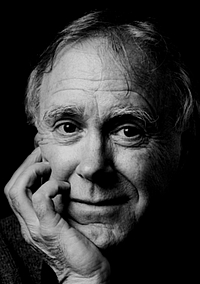
Robert hass: blackberries for a black hat dancer

First published in Blue Dog: Australian Poetry

“Meditation at Lagunitas” rides, as Robert Frost says a poem must, on its own melting: “like a piece of ice on a hot stove”. It is perhaps my favourite poem. But writing about favourite poems — as Robert Hass himself notes in his collection of essays, Twentieth Century Pleasures — “is probably a hopeless matter.” You can analyze the music of the poem, he writes, “but it’s difficult to conduct an argument about its value, especially when it’s gotten into the blood. It becomes autobiography there”. I first read “Lagunitas” in 1991 — almost twenty years after Hass first published it — and there was so little in it of what I see now, that it amazes me to remember what it was I originally saw.

robert hassOnly Connect – EM Forster

“Meditation at Lagunitas” rides, as Robert Frost says a poem must, on its own melting: “like a piece of ice on a hot stove”. It is perhaps my favourite poem. But writing about favourite poems — as Robert Hass himself notes in his collection of essays, Twentieth Century Pleasures — “is probably a hopeless matter.” You can analyze the music of the poem, he writes, “but it’s difficult to conduct an argument about its value, especially when it’s gotten into the blood. It becomes autobiography there”.

I first read “Lagunitas” in 1991 — almost twenty years after Hass first published it — and there was so little in it of what I see now, that it amazes me to remember what it was I originally saw. It was the time of the Gulf War, and I was living at the edge of Oceanside, one of California’s largest military towns. Determined to “not let this be another Vietnam,” baby-boomers declared their support for their boys abroad by flying U.S. flags, rescued from the tangle of Christmas lights in their attics, in the skies above their manicured lawns. My neighbours even went so far as to attach plastic “stars and stripes” to the antennas of their Mazda minivans and Volvo stationwagons. One afternoon, I remember, after Bush had issued one of his ultimatums to “Sadim,” as he deliberately “misspoke,” two hundred students from UCSD laid their collective body across five lanes of California highway and stopped traffic for about two hours. Local reporters, overnight celebrities, largely ignored the incident and talked instead of “peacekeeping,” “humanitarian intervention” and “friendly fire.” Operation “Desert Storm” rivaled “The Cold War” for its poetry: from CNN, not Derrida, I learned that language is slick, and meaning is without a centre.

“Lagunitas” is a meditation not on loss but the idea of loss. With its majestic opening, “all the new thinking is about loss. / In this it resembles all the old thinking”, Hass locates the reader in the realm of abstractions where the “luminous clarity of the general idea” is privileged over “each particular”. The idea, for example:

That the clown-
faced woodpecker probing the dead sculpted trunk
of that black birch is, by his presence,
some tragic falling off from a first world
of undivided light.

Or the notion that, “because there is in this world no one thing / to which the bramble of blackberry corresponds, / a word is elegy to what it signifies”. Hass has never shied away from the language of theoretical discourse. In fact, as Don Bogen notes, “he finds a rarefied music in the polysyllabic abstractions, long clauses and parallel constructions of his argument”. Language here is reduced to its barest essentials, to strings of spondaic feet — “trunk / of that black birch is” or “there is in this world no one thing / to which” — that hit the air like a philosopher’s finger. Deprived of traditional harmonic concepts, Hass’ prosody, in these cases, is absent a feeling of key. Still, I find a dark, almost brooding, beauty to the lines, like the beauty I have found in Nietzsche after reading Foucault.

But “talking this way”, Hass understands, after a while dissolves everything: “justice, / pine, hair, woman, you and I ”, an understanding that is at once a lament for the dissolution of language and a critique of “all the new thinking.” So to fill the resultant void — or test these philosophical axioms along his pulses — Hass recalls a woman he made love to, and remembers how, holding her small shoulders in his hands sometimes, he “felt a violent wonder at her presence / like a thirst for salt”. And it is this violent wonder, Hass’ meditation on presence, which yields the poem’s loveliest lines, complete with bittersweet enjambment: “Longing, we say, because desire is full / of endless distances”.

Ironically, it is with the dissolution of language and the commencement of memory, that Hass finds his stride in his heartbeat, and the iambic meter begins: “But I remember so much, the way her hands dismantled bread, / the thing her father said that hurt her, what / she dreamed”. It is not the hands that break the bread as much as the sounds of the words. The surprise of dismantled — a word associated more with regimes and contraptions than with hands and bread — an ugly duckling turned swan by its iambic necessity: the more expected broke would have disrupted the metre, thereby emphasising the bread and not the act. And, in the next line — perfect iambic pentameter — the stresses land cleanly on the thing her father said and what she dreamed, emphasising that it is particulars which create meaning not erase them.

It is the absolute humanity of these lines that moves, and sometimes crushes, me. Hass’ voice resounds with devotion to remembrance, as if his memory of the woman — his true companion in the etymological sense of the word, the one he eats bread with — might save him The scene is erotically charged and yet, evocative of holy communion, it glows with an aura of religiosity. But one need not be religious — and I am not — to appreciate the astounding beauty of Hass’ ultimate realisation: “there are moments when the body is as numinous / as words, days that are the good flesh continuing”.

Perhaps this is why, after reading Jacques Lacan in 1994, I felt — upon rereading “Lagunitas” — as if I were standing in my bedroom and seeing that I was without a floor. “Lagunitas,” I saw, was not simply a meditation on the idea of loss, but an actual working model of Lacan’s theory of the unconscious. Suddenly, Hass’ “clown-faced woodpecker” became an instance of mere lack (manque); his bramble of blackberry, without a corresponding signified, indicated need (besoin); and his beloved, simply the conscious object of his desire (désir).

Without exception, “Lagunitas” models every stage of Lacan’s theory: the Mirror-Stage, where the child experiences itself as le Désire de la Mère is “a first world / of undivided light”; the psychic field of the Imaginary, where reality is grasped purely as images and fantasies for the fulfillment of desire, is Hass’ thirst “for his childhood river / with its island willows, [and] silly music from the pleasure boat”; the field of the Symbolic, where repression and the unconscious begins as the child learns the names of things, is the “muddy places where we caught little orange-silver fish called pumpkinseed”; the Name-of-the-Father (le Nom-du-Pére which, in French, is pronounced like the No-of-the-Father), where desired objects are replaced by metaphor and metonymy is, of course, “the thing her father said that hurt her”; and finally, the field of the Real, which seems to mean those incomprehensible aspects of experience that exist beyond the grasp of images and symbols through which we think and constitute reality, is Hass’ “moments when the body is numinous as words”.

But this exegesis, brief as it is, is not my hamfisted attempt to fit “Lagunitas” into Lacan’s theory of the unconscious. Rather it is a reading which Hass himself not only courts but has carefully constructed. First, the scene is set with “all the new thinking…about loss” — Derrida and Althusser perhaps — resembling the old — Lacan and Freud among others. And second, “Lagunitas” is strewn with synonyms of post-structuralist deconstruction: erase, divide, dissolve and dismantle. As evidence that Hass was conscious of his word choice in this way — twenty-five years later — Hass uses “dismantle” again in “Regalia for a Black Hat Dancer”:

This was a time when,
in the universities, everyone was reading Derrida.
Who’d set out to write a dissertation about time;
he read Heidegger, Husserl, Kant, Augustine, and found
that there was no place to stand from which to talk about it.
There was no ground. It was language. The scandal
of nothingness! Put cheerfully to work by my colleagues
to dismantle regnant ideologies.

This tactic of literary referencing is one of Hass’ most extended poetic tropes; everywhere his poems describe their sources and discuss what they do or do not or cannot mean. One of my favourite examples of this trope occurs in Praise — nineteen poems after “Lagunitas” — with a poem I had largely ignored for years, “Picking Blackberries with a Friend Who Has Been Reading Jacques Lacan.” In it, Hass recasts the conversation in “Lagunitas” and has “stopped talking about L’Histoire de la vérité, /about subject and object / and the mediation of desire”. He has blocked his ears,

And Charlie,
laughing wonderfully,
beard stained purple
by the word juice,
goes to get another pot.

I love the humour in this resolution. But what brings “a thin wire of grief to my voice, / a tone almost querulous”, is the idea that “Lagunitas” is not, as I had originally imagined it to be, “the repository of a unique history which makes each of us an irreplaceable being”. Rather, it is like Levi Straus’ unconscious: “reducible to a function, the symbolic function” which, in turn, is merely “the aggregate of the laws of language”.

That a poem can have more than one meaning is not a radical idea. But it can be a disturbing idea, particularly with favourite poems, and particularly when a new reading threatens to undo an earlier one. I can find no “happy mediums” here, only tension: the tension between an original meaning found in melody and a newer meaning found in text books; the tension between always being inscribed within language and the understanding that language does not comprise our ultimate reality; and the tension, finally, between the inadequacy of language and a poem brimming with meaning.

But it is tension, I have found, which keeps “Lagunitas” alive. The idea, then, must be not to resolve but to leap. And because I love so much Hass’ gift of the leap — what Denise Levertov calls “the X-factor, the magic” that happens when we come to rifts, to “undreamed abysses,” and we find ourselves “sailing slowly over them and landing on the other side” in “ecstasy” — I conclude with the final lines of “Meditation at Lagunitas”:

Such tenderness, those afternoons and evenings,
saying blackberry, blackberry, blackberry.

Which is beautiful, any way you melt it.

“It is summer as I write, / Northern California. Clear air, a blazing sky in August, / bright shy Audubon’s warblers in the pines,” writes Hass in “The Garden of Warsaw”. Although Hass’ 1997 collection, Sun Under Wood, contains poems with settings in Alaska, Korea, Warsaw, Iowa City and New Jersey, critic Alan Williamson identifies Hass as the poet in his generation “who has made California landscapes most memorably symbolic”:

The landscape is mostly Berkeley, with the long Japanese-print views of the Golden Gate; the Marin County uplands; an occasional glimpse of the Sierras. What it embodies is not majesty, as in Jeffers, or a transhuman alertness, as in Snyder, but a mellow clarity, a late-afternoon warmth in which longing is bounded, life is found acceptable.

“Sweet smell of timothy in the meadow. / Clouds massing east above the ridge in a sky / as blue as the mountain lakes”, Williamson quotes from Hass’ “My Mother’s Nipples” to illustrate his point.

Yet, charm and modesty noted, Peter Davison objects to Hass’ frequent use of “passive, copulative or auxiliary verbs” in his descriptions and complains that Hass’ poems “keep relaxing into the voice of an onlooker rather than taking on the energy of full participation — as though they came to the poet through a window, filter, a screen of white noise and unscented air”. Davison’s assessment is not atypical: it is a slight heard frequently not only from Hass’ critics but also from his otherwise admiring readers. As one “customer reviewer” from Amazon.com wrote of Hass’ Sun Under Wood, “more nature stuff than I remember from Praise, which I rarely understand the point of. It seems an overly romantic view of the world.” Another admitted, “this may be a personal bias of mine; I often find Hass’ longer [nature] poems tiring and repetitive.” But the real surprise comes when Hass himself directly confronts this criticism in “Interrupted Meditation” which discloses a conversation between Hass and, I assume, his friend and colleague, Czeslaw Milosz, who is speaking:

Of course, here, gesturing out the window, pines, ragged green
of a winter lawn, the bay, you can express what you like,
enumerate the vegetation. And you! you have to, I’m afraid,
since you don’t excel at metaphor. A shrewd, quick glance
to see how I have taken this thrust. You write well, clearly.

I still smile when I read these lines. Clearly, Hass has taken the “thrust” well. Not only does Hass “out” this criticism of his poetry, taking his own “shrewd, quick…thrust” at his detractors, but he also provides a parody of it. And it amuses me also because until recently I, too, shared this view.

Until recently, I say, because I no longer read Hass’ landscapes this way. When I think of poets where nature figures prominently in their work, I am inclined to think of Wordsworth’s “glory in the flower” or Whitman “nose down in the grass.” But Hass’ experience of nature, I believe, is quite different. It is not transcendent euphoria. It is, I believe, his private symbol of loss.

For instance, circling back to Williamson, it is entirely possible to get an impression of “mellow clarity” from the lines he quotes from “My Mother’s Nipples, but only if the reader omits the stanza’s first line, “what we’ve never had is a song”, and its last three: “the many seed shapes of the many things / finding their way into flower or not, / that the wind scatters,” which bracket the stanza in melancholy. Or more clearly, if the reader chooses not to read the prose stanza that immediately follows it:

I came home from school and she was gone. I don’t know what in-
stinct sent me to the park. I suppose it was the only place I could
think of where someone might hide: she had passedout under an or-
ange tree, curled up. Her face, flushed, eyelids swollen, was a ruin.
Though I needed urgently to know whatever was in it, I could
hardly bear to look. When I couldn’t wake her, I decided to sit with
her until she woke up. I must have been ten years old: I suppose I
wanted for us to look like a son and mother who had been picnick-
ing, like a mother who had fallen asleep in the warm light and scent
of orange blossoms and a boy who was sitting beside her daydream-
ing, not thinking about anything in particular.

The “justified” text and unwarranted word breaks draw attention to the self-consciousness of both the boy and the adult poet. It is as if Hass is commenting on his tactic of literary referencing as he does in “Our Lady of the Snows” where the mother is visited “in a hospital drying out,” and her son, learning to bear his “navigable sorrow” stands at his older brother’s closet “studying the shirts,” convinced that he “could be absolutely transformed / by something [he] could borrow”. To me Hass views nature this way, as if it is a shirt — or even a body — that he can borrow.

“Regalia for a Black Hat Dancer,” I believe, provides the key to understanding Hass’ private symbol. It is a poem about emptiness, or rather “two emptinesses: one made of pain and desire and one made of vacancy”. Consider, for example, the juxtaposition in these lines: “my throat so swollen with some unsortable mix / of sorrow and desire I couldn’t swallow — / salt smell, grey water, sometimes the fog came in”. Just as lungs fill with air when the pressure is greater outside the body than within, Hass is “filled” with nature when he is at his emptiest. He continues:

and I’d present my emptiness, which was huge, baffled
(Rilke writing in French because there was no German equivalent
for l’absence in ‘the great positive sense’
with which it appeared in Valéry:
one of my minor occupations was raging against Rilke),
and most of the time I felt nothing,
when the moment came that was supposed to embody presence,
nothing really. There were a few buffleheads,
as usual, a few gulls rocking in the surf.

Nature, then, is a mask for his own disembodiment. His “baffled” emptiness is filled by the off-rhyme of the buffleheads. This gesture is also present in “Sonnet” which begins with “A man talking to his ex-wife on the phone” who, we are told, “has loved her voice and listens with attention / to every modulation of its tone”. He knows the voice “intimately” but knows not “what he wants / from the sound of it, from the tendered civility”. And with this admission of need and longing, the man “studies, out the window, the seed shapes / of the broken pods of ornamental trees”. Unlike “Lagunitas,” this poem does not melt as if “ice on a hot stove,” but continues to dissipate, its thrust irrecoverably lost, until it ends on the line “patient animals, and tangled vines, and rain”. Another illustration, my favourite, of Hass using nature as a body comes from “Interrupted Meditation”:

She sat on the couch sobbing, her rib cage shaking
for its accumulated abysses of grief and thick sorrow.
I don’t love you, she said. The terrible thing is

(In my edition of Sun Under Wood the page breaks on this line, making turning the page a shattering act, knowing as I do the next two lines by heart.)

that I don’t think I ever loved you. He thought to himself
what he had done to provoke it. It was May.

And with “May” we know where Hass is headed; out of his body and out the window:
Also pines, lawn, the bay, a blossoming apricot.

Everyone their own devastation. Each on its own scale.

“When you look past my shoulder and out the window,” Hass said in a lecture on imagery, “it is not an aspen you see quivering in the snow, but the play of light on your retinas.” I remember being disappointed with this idea and, when I transcribed it into my journal, I wrote above it, “which robs the world of yet another tree.” But these days I am inclined to see Hass’ comment as another rewriting, another retelling, of his private symbol of loss. But, as Octavio Paz has said, “the feeling of separation is universal.” Paz continues:

It is born at the moment of our birth: as we are wrenched from the Whole, we fall into an alien land. This experience becomes a wound that never heals. It is the unfathomable depth of every man; all our ventures and exploits, all our acts and dreams, are bridges designed to overcome the separation and reunite us with the world and our fellow beings. Each man’s life, and the collective history of mankind, can be seen as an attempt to reconstruct the original situation. An unfinished and endless cure for our divided condition.

By “experiencing” the aspen this way, as enscripted onto his body, Hass attempts this reconstruction. As do all of his poems, I suppose.

“Private pain is easy in a way,” Hass says in “Regalia,” “it doesn’t go away, but you can teach yourself to see its size”. I remember the years following my own divorce, years of my own devastation, when I liked to hike barefoot in California’s San Jacinto mountains. “I have feet like hooves,” I would joke. But it wasn’t a joke — it was my private ritual — walking until I could feel something and, if I was lucky, it was only my feet. On a good day, I would make it as far as “Hidden Lake” and, if it was winter, my body would tear the thin crust of ice as I stepped into it. And I would stand, or sit if I could bear it, until my heart beat so loud I could find it. When I got home, if I was lucky, I was hungry.

In 1997 I attended the annual Squaw Valley Poetry Workshop in Lake Tahoe, California. The idea of the week-long workshop is to write a poem a day, and then workshop it with a “celebrity poet” the next day. My last workshop was with Robert Hass — who was still US Poet Laureate at the time — and I was terribly nervous. But when the moment arrived, it felt a little anticlimactic. His comments on participants’ work were sparse and random, and I got the impression, for all his empathy, that Hass was pained by the process. Or rather, pained by the workshop’s mandate of “positive comments only” — a flawed philosophy, I believe, that insists that poets learn more from being told what is good than what is not; or at least, the philosophy goes, it keeps them writing. And flawed, I say, because it seems to me — a self-accused Romantic — that the whole is better than any half. I thought of Hass’ “minor occupation of raging against Rilke” and wondered if he felt at all stifled, trapped as he was, on only one side of a dialectic. I never did find out. I had written a poem called “Betel Nut and Lime” and it was up next. Hass said he liked my “blank couplets,” that a writer of good couplets was rare, and that he envied my material. I felt I was up to more criticism than that, wanting so desperately to learn, but in the end I was grateful for the fragment.

After the last poem of the workshop was read, Hass was silent. While the other poets offered their praise and “suggestions in the spirit of options,” Hass stared at the floor. He appeared happy or sad, but mostly puzzled. When the commentaries petered into silence, Hass looked up, a little startled to find us still with him. He smiled. “The first word of the first poem on the first day was sorrow,” he said, “and the last word of the last poem on the last day is marrow.” Silence. “I’d call the week a success,” he concluded.

I left Squaw Valley that afternoon and drove south seven hours along I-5, a pittance of highway’s great unbroken length, stretching from Canada down through California’s burgeoning agricultural belt to Mexico. I felt at once invincible and vulnerable as I drove through a herd of migrating butterflies and, in my head, I wrote a first draft of “Driving into Distance.” But once home, instead of writing out my new poem, I sat down to a cup of green tea and rifled through the copious notes and poems I had collected during the week. I needed to locate the first day of workshop. From sorrow to marrow. Its marvel of assonance and rhyme — Carlyle’s “melody that lies hidden in it” — its serendipity and transformation. It felt too near-perfect for coincidence; so near perfect as to appear contrived. I just had to know if Hass was correct. He was. Only connect.

First published in Blue Dog: Australian Poetry 1.1 (2002): 74–80