Chinese Gold: Mo Yan’s Nobel Win

Some of the names thrown around were Haruki Murakami from Japan – author of Norwegian Wood and, most recently, 1Q84, a novel about a woman who slips into an alternate reality; Margaret Atwood or better yet Alice Munro from Canada; Syrian poet, Adonis; and Nigerian novelist, Chinua Achebe, best known for his magnum opus, Things Fall Apart, the most widely read novel in Africa. Australia’s best bet to win the Nobel Prize in literature remains Les Murray. Widely acknowledged as one of the best poets writing in English today, his name is perennially linked to three postcolonial poets – all Nobel laureates – Derek Walcott from Saint Lucia, Seamus Heaney from Northern Ireland and the late Joseph Brodsky who hailed from the USSR. Each year America hopes, however unlikely, Bob Dylan might be their winner, but novelist Philip Roth is a more serious contender. In European eyes, contemporary American authors, it must be said, are considered too insular and unworldly to be strong contenders.

Some of the names thrown around were Haruki Murakami from Japan – author of Norwegian Wood and, most recently, 1Q84, a novel about a woman who slips into an alternate reality; Margaret Atwood or better yet Alice Munro from Canada; Syrian poet, Adonis; and Nigerian novelist, Chinua Achebe, best known for his magnum opus, Things Fall Apart, the most widely read novel in Africa.

Australia’s best bet to win the Nobel Prize in literature remains Les Murray. Widely acknowledged as one of the best poets writing in English today, his name is perennially linked to three postcolonial poets – all Nobel laureates – Derek Walcott from Saint Lucia, Seamus Heaney from Northern Ireland and the late Joseph Brodsky who hailed from the USSR.

Each year America hopes, however unlikely, Bob Dylan might be their winner, but novelist Philip Roth is a more serious contender. In European eyes, contemporary American authors, it must be said, are considered too insular and unworldly to be strong contenders.

The 105th Nobel Prize for literature was awarded to novelist Mo Yan from China for his many works, the Swedish academy said, of “hallucinatory realism” that “merges folk tales, history and the contemporary”.

The announcement was made at 10 pm (Australian time) on Thursday evening. When the academy phoned him at home to inform about the prize, Mo said he was “overjoyed and scared”.

Born Guan Moey, Mo assumed his non de plume – meaning “don’t speak” – to remind himself to hold his tongue and avoid trouble. He is the first Chinese national to win the Nobel Prize for literature (Gao Xingjian won in 2000 but by then he was residing in Paris).

Mo admits that early on his novels were fuelled by a desire to escape poverty. But these days, as one of China’s bestselling authors, money is no longer the motivator.

Mo came to fame with Red Sorghum, a novel set during the Japanese occupation which was made into a film directed by Yimou Zhang in 1987.

His other books include his masterwork, Big Breasts and Wide Hips, and the more accessible Garlic Ballads, a beautiful yet brutal novel about the suffering of farmers ordered to grow garlic crops in Revolutionary China.

Following the Nobel prizes for medicine, physics and chemistry earlier this week, the literature prize is the fourth and one of the most anticipated announcements the Nobel season. The Nobel Peace Prize will be announced today at noon, followed by the Economics Prize on Monday.

Following tradition, laureates will receive their prize at a formal ceremony in Stockholm on 10 December, the anniversary of the death of the prizes’ eponymous benefactor, Alfred Nobel, in 1896.

Interestingly two authors have declined the Nobel Prize in literature: Boris Pasternak in 1958 and Jean Paul Sartre in 1964.

As a result of the economic crisis, the Nobel Foundation has cut the prize money to eight million Swedish kronor ($A1.18 million) per award, down from the 10 million kronor awarded since 2001.

Last year, the literature prize went to Swedish poet Tomas Tranströemer.

The Conversation

This article was originally published at The Conversation.
Read the original article.

New Queensland literary award

Campbell Newman might have hoped the Queensland Premier’s Literary Awards were dead, buried and cremated: the allocated prize pool of $230,000 shared across 14 categories had been scratched from his budget and any mention of the awards, including past winners since 1999, was thoroughly wiped from his website. But miraculously – or rather due to the harnessed outrage and exhaustive efforts of volunteers from Queensland’s literary and arts community – a new suite of literary awards has arisen from the ashes without a skerrick of government funding, nor the Premier’s name in the title.

QLD-Literary-AwardsCampbell Newman might have hoped the Queensland Premier’s Literary Awards were dead, buried and cremated: the allocated prize pool of $230,000 shared across 14 categories had been scratched from his budget and any mention of the awards, including past winners since 1999, was thoroughly wiped from his website.

But miraculously – or rather due to the harnessed outrage and exhaustive efforts of volunteers from Queensland’s literary and arts community – a new suite of literary awards has arisen from the ashes without a skerrick of government funding, nor the Premier’s name in the title. Short on lead time and with no funding in place, the group led by Matthew Condon, Krissy Kneen and Stuart Glover assembled in April to create a website and Facebook page which attracted more than 1000 fans in under a week.

The Copyright Agency Cultural Fund injected $20,000 into the kitty, and a fundraising campaign on www.pozible.com raised more than $30,000 for author prizes and associated costs. Avid Reader bookshop offered its premises to house and distribute the 600-plus book and manuscript submissions the campaign received.

The inaugural Queensland Literary Awards, announced last night in Brisbane, were described by Frank Moorhouse – winner of the QLA Fiction Book Award for his novel Cold Light – as “the noblest prize this year.”

“It has some cache because it’s a citizen’s prize,” he said, “not the Premier’s prize.”

Echoing sentiments expressed by Anna Funder in her Miles Franklin acceptance speech earlier this year, Moorhouse expounded: “Governments are not only there to legislate, but to affirm civilised values.”

But if citizens are going to have to fund it with two dollars here and five dollars there,” Moorhouse continued, “it is rather a shameful situation. It sends a very sad message to kids who want to get into the creative arts.

From a shortlist of 68 titles, the winners in each category of the Queensland Literary Awards received $1000, with Queensland novelist Simon Cleary, winner of the inaugural Courier-Mail’s People’s Choice Queensland Book of the Year, snapping up $5,000 for his novel, Closer to Stone.

Premier Campbell Newman and Ros Bates, Minister for Science, IT, Innovation and the Arts, so far have not offered their congratulations.

The Conversation

This article was originally published at The Conversation.
Read the original article.

End of empire: vale gore vidal

6a00d83452403c69e2017743d3b90f970d-800wi“Style,” Gore Vidal defined, “is knowing who you are, what you want to say, and not giving a damn.” And that is precisely how Vidal – daring, bawdy, an intellectual swashbuckler – lived his life, which ended in the Hollywood Hills on the evening of 31 July 2012.

Vidal knew that to write well an inner daemon must be allowed to break free. He could always be counted on for a wicked aphorism (“It is not enough to succeed. Others must fail.”), a devastating put down – necessarily unfair but not necessarily untrue – or a contemptuous critique of the day: “As the age of television progresses the Reagans will be the rule, not the exception. To be perfect for television is all a President has to be these days”.

Or: “Half of the American people have never read a newspaper. Half never voted for President. One hopes it is the same half”.

But Vidal could also hold a mirror – fleetingly at least – to his own shortcomings: “I am at heart a propagandist, a tremendous hater, a tiresome nag, complacently positive that there is no human problem which could not be solved if people would simply do as I advise”. He also called himself “the gentleman bitch” of American letters.

I am exactly as I appear. There is no warm, lovable person inside. Beneath my cold exterior, once you break the ice, you find cold water.

Vidal’s oeuvre showcases, if barely contains, his dessicated humour and freewheeling intellect – few topics were beneath him – as well as his prodigious knowledge of politics and history and his will to live as he pleased.

Born in 1925 at the United States Military Academy at West Point in New York, Vidal wrote his first novel, Williwaw, when he was 19 years old and serving in the Army.

He went on to write more than 20 novels, notably the Narratives of Empire series – a heptology of historical novels, Lincoln: A Novel being the most distinguished – that chronicles the dawn of the “American Empire” to, in Vidal’s eyes, its decay.

But Vidal is most admired – and will likely be remembered into the future – for his essays. In 1993, he won the National Book Award for Nonfiction for the collection United States: Essays 1952–1992. “Whatever his subject,” the judges extolled, “he addresses it with an artist’s resonant appreciation, a scholar’s conscience and the persuasive powers of a great essayist.”

In 1997 Vidal visited Australia as a guest of (then NSW Premier) Bob Carr, whom Vidal described in interview with Richard Glover “as terribly intelligent, and he reads a great deal”.

Similarly Vidal met Gough Whitlam in 1974 and considered him – in contrast to the “smooth lawyers with blow-dried hair who look wonderful on TV and don’t know anything except how to take orders from the corporations” – “far too well read for his position in life”.

Carr farewelled Vidal, describing him as a great polymath: “a thoughtful, ideologically consistent, extremely committed and an American isolationist”.

“Gore Vidal’s passing at age 86 is a loss to his country, to literature and to history,” Carr said. “There won’t be another mind like his”.

Vidal will be buried in a plot he will share with his life partner of more than 30 years, Howard Austen, at Rock Creek Cemetery in Washington, DC.

The Conversation

This article was originally published at The Conversation.
Read the original article.

The poetry bestseller

At first glance the phrase ‘best-selling poetry book’ looks oxymoronic. Anyone with a vague sense of book publishing is acquainted with the orthodoxy that poetry doesn’t sell: readers don’t want to read it. Commercial publishers have used this pearl to justify curtailing or, more dramatically, cancelling their poetry lists. Booksellers have relied on it as a way of explaining away – to the few who might enquire – their thin and often uninspired poetry stock. And who can blame them? Publishers and booksellers are not in the business of charity. The poetry book, without a benefactor, is fading from popular culture. Or is it?

Khalil GibranAt first glance the phrase ‘best-selling poetry book’ looks oxymoronic. Anyone with a vague sense of book publishing is acquainted with the orthodoxy that poetry doesn’t sell: readers don’t want to read it. Commercial publishers have used this pearl to justify curtailing or, more dramatically, cancelling their poetry lists. Booksellers have relied on it as a way of explaining away – to the few who might enquire – their thin and often uninspired poetry stock. And who can blame them? Publishers and booksellers are not in the business of charity. The poetry book, without a benefactor, is fading from popular culture. Or is it?

Certainly if one looks at the life of a contemporary book of poems it would appear so. Poetry publishing in Australia (and indeed in most Western countries) has been relegated in the main to boutique presses and self-publishing outfits that run on the good will and thankless efforts of poetry enthusiasts. Outfits that stay afloat often do not have sufficient access to resources, distribution and marketing to have their books noticed by readers. Their books are inadequately reviewed or not reviewed at all. Those that do find a buyer do so mostly at poetry readings to fellow poets – thereby flying under the radar of Neilsen BookScan which makes official sales look even worse. Under these conditions the thus-far unchallenged maxim that ‘poetry doesn’t sell’ becomes self-fulfilling prophesy.

But all this bellyaching conceals an interesting fact: some poetry books actually do sell. Some sell very well indeed. Some poetry books are even bestsellers.

It’s widely agreed that Australia’s best bet for a second Nobel Laureate in Literature is not a novelist but, astonishing to some, a poet: Les Murray. Murray’s books, critically acclaimed at home and overseas, have garnered a plethora of prestigious awards, including Britain’s coveted TS Eliot Poetry Prize. His publicity frequently affirms him as one of the best poets writing in English today, and Murray is regularly grouped with a trinity of recent Laureate poets: Ireland’s Seamus Heaney, Russian–American Joseph Brodsky, and the Caribbean’s Derek Walcott. With domestic sales buoyed by his international sales (in English and in translation), Murray’s reputation as a poetry heavy–hitter translates into healthy book sales by the standards of contemporary poetry. Nevertheless, and relevant to this conversation, even Murray has been left on several occasions in his career without a publisher due to the aforementioned vagaries of the sector. But more on Murray later.

Poetry readership in Australia looks comparatively good when figures are adjusted for population. As Murray has pointed out, poetry in Australia enjoys a much larger readership in proportion to population than in most Western countries. Whereas a typical US poetry title runs to about 1500 copies, a poetry title by a reasonably well-known poet in Australia (at about one-fifteenth of the US population) runs to about half the US number.

But not all Australian poets enjoying relatively healthy sales have a profile to match Murray’s. In fact some lesser–known poets might sell even more copies of their books. Poets lucky enough to have their books set on high school English curricula can often compete with sales figures of fiction authors. One poet in this enviable position, Peter Skrzynecki, whose book Immigrant Chronicle has remained in print for 30 years. Another favourite on the HSC curricula, Bruce Dawe, is – at least according to his Sometimes Gladness book jacket – Australia’s bestselling living poet. While sales figures have yet to be verified in a full-scale study, it is fair to say that Dawe and Skrzynecki, and a handful of others, have bypassed the imperative of the marketplace and been turned into poetry bestsellers by the education sector.

But it is still difficult to find these books in bookshops. And it is difficult to mount the case that these books, their success aside, have entered the realm of popular culture. So which poetry books, if any, have?

To answer this question, it is necessary to cast one’s vision temporarily beyond the realm of Australian poets and, further, beyond the realm of the living. Immediately Shakespeare struts upon the stage. And in fact Shakespeare, we are told, is the best-selling poet in English of all time. The author of – at least as we are able to count his works today – 38 plays, 154 sonnets, two long narrative poems and a handful of others, Shakespeare has been generating sales in a proliferation of editions for the past 400 years.

But what about poetry sales not mounted over time, but poetry titles that sell well in a given year? Well, things get interesting.

Figures out of the United Sates – a significant market for literature in English – do not rank Shakespeare as number one on their bestseller list for poetry. The best-selling poet in America today is not only dead but he – let gender be no surprise – also did not write in English. He’s not an American. Some might even say he is un-American.

The prize for best-selling poet in America goes to a poet in translation: Jalal al-Din Molavi Rumi. A Sufi poet known to Iranians as Mawlana. Or, to Westerners, simply as Rumi.

Rumi was born in Balkh, which is now in Afghanistan, in 1207 on the shores of the Persian Empire, but he lived most of his life in the town of Konya, in what is now Turkey. Rumi’s major work is a six-volume poem, Masnavi-ye Manavi (Spiritual Couplets), regarded by some Sufis as the Persian-language Qur’an. The general theme of Rumi’s thought, like that of other mystic and Sufi poets of Persian literature, is essentially the concept of tawhid – union with his beloved – and his longing and desire to restore it. He writes:

There’s a strange frenzy in my head,
of birds flying,
each particle circulating on its own.
Is the one I love everywhere?

Rumi sought god everywhere and in everybody. He encouraged others to experience the ecstatic union: “It doesn’t matter that you’ve broken your vow / a thousand times. Still come, / and yet again, come”.

Rumi’s voice still resonates. It touches, if we are to judge by sales, the contemporary reader with the same fervour as it did 700 ago. It touches celebrities too: Madonna set his poems to music on Deepak Chopra’s 1998 CD, A Gift of Love. Donna Karan has used recitations of his poetry as a background to her fashion shows; Philip Glass has written an opera – Monsters of Grace – around his poems; and Oliver Stone apparently wants to make a film of his life.

American poet Coleman Barks, perhaps more than anyone, is responsible for bringing Rumi’s poetry to the English-speaking masses. Barks is not a scholar – and he doesn’t speak a word of Persian. But this didn’t stop his book, The Essential Rumi (HarperCollins 1995), from being the most successful poetry book published in the West in recent years. Coleman has come out with a new book of Rumi translations every September for the past decade.

Even the 9/11 attacks didn’t subdue the public’s interest in mystical Islamic verse: Coleman’s The Soul of Rumi, released days after the Trade Centre bombings, went on to become a bestseller. Barks himself seems surprised by sales of his Rumi translations. In the preface to his 2003 book, Rumi: The Book of Love, he confesses:

I have sold too many books. I once calculated that Rumi books sell at least a hundred a day right through weekends and holidays, while my own writing goes at about twelve copies a month, worldwide. In other words, Rumi’s work sells at about 365,000 copies a year; Barks sells 144. Those numbers keep me humble.

Rumi is popular not only in America but also in Australia. Nevertheless his book sales – Barks’s translations as well as other scholarly editions – fall short of granting him primacy. Neilsen BookScan, which records book sales in Australia since 2002, reveals two poets neck and neck: the Greek poet Homer (which is not his name, scholars tell us, but the name he goes by), author of The Odyssey and The Iliad; and twentieth-century Lebanese poet, Khalil Gibran, whose book The Prophet made him a household name.

Homer’s epic poems – second in antiquity only to (what-is-now) Iraq’s Gilgamesh – are about war, gods and mortality. Although a steady favourite on education lists, Homer enjoyed a surge of popularity when The Iliad was morphed in a 2004 film called Troy starring Brad Pitt.

But Gibran, who writes on ‘spiritual’ themes, is never studied in institutions. And yet he is considered the third-best selling poet in history after Shakespeare and sixth-century BC Chinese poet, Lao Tzu. In Australia – adding his book sales across all edition of The Prophet – Gibran is the clear favourite.

Born in 1883 in Bsharii in modern-day northern Lebanon, Gibran died of liver failure at the age of 48 in New York. The Prophet, his first book, was published in 1923, and incredibly it sold over 1000 copies in three months. Its fame spread by word of mouth. By 1931 it had been translated into 20 languages. By the 60s it was a favourite with American youth culture. It’s been popular ever since.

The fictional set up for The Prophet parallels the legendary story of Lao Tzu’s writing of the Lao Tzu’s writing of the Tao Te Ching (on his way to Tibet he is stopped by a border guard and made to record his teachings before leaving). In Gibran’s book, however, the prophet Almustafa has lived for 12 years in the foreign city of Orphalese and is heading home when a group of people stop him and he offers to share his wisdom on an array of issues pertaining to life and the human condition: love, marriage, children, giving, eating and drinking, work, joy and sorrow, houses, crime and punishment, reason and passion, self-knowledge, beauty, death and so on. The chapter on marriage is perhaps the best known, as it’s a regular in wedding ceremonies. A testament to love (and an argument against codependence), it concludes:

Give your hearts but not into each other’s keeping.
For only the hand of Life can contain your hearts.
And stand together yet not too near together:
For the pillars of the temple stand apart,
And the oak tree and cypress grow not in each other’s shadow.

Gibran might be one of the best-selling poets in Australia over the past five years, but what is the best-selling individual poetry title during this time?

The prize goes to Desiderata: A Survival Guide for Life (Random House 2002) which houses the inspirational prose poem, ‘Desiderata’, offering instruction for attaining happiness in life. The title in Latin for ‘desired things’ or ‘things that are yearned for’, but in the context of the poem ‘essential things’ is a more accurate translation. It opens with the following advice:

Go placidly amid the noise and the haste,
and remember what peace there may be in silence.
As far as possible without surrender be on good terms with all persons.
Speak your truth quietly and clearly; and listen to others,
even to the dull and the ignorant, they too have their story.
Avoid loud and aggressive persons, they are vexations to the spirit.

The poem ends with the directive: ‘Strive to be happy’.

As with the ubiquitous ‘Footprints in the Sand’ poem, whose authorship and copyright holding remains hotly contested (no fewer than four authors claim to have written it), questions of authorship have beset ‘Desiderata’. The poem was first copyrighted in 1927 by Max Ehrmann, a lawyer from Indianna, inspired by an urge that he described in his diary: ‘I should like, if I could, to leave a humble gift – a bit of chaste prose that had caught up some noble moods’.

But in the 1960s ‘Desiderata’ was widely circulated without attribution to Ehrmann. In face, a myth arose that the poem was written in 1692 by an unknown author. The slip came about when Reverend Frederick Kates reproduced the Desiderata poem for his congregation in 1959 on church letterhead which read: The Old St Paul’s Church, Baltimore, AD 1692. It was only a matter of time before a publisher interpreted this notation as meaning that the poem itself was found in Old St Paul’s Church, and that it had been written in 1692, and therefore took the poem to be in the public domain.

It was an unhappy error. Worse, law suits ensued. One court case held that the poem was forfeited to the public domain because Ehrmann had freely distributed it on Christmas cards to soldiers during WWII. But other cases have ruled that Crescendo Publishing Company – who bought the poem for an undisclosed amount in 1975 from Ehrmann’s heirs – holds copyright. It seems that the course cannot agree on the issue. There is no doubt, however, that the mistake in authorship added to the charm and historic appeal of the poem (despite the fact that the actual language in the poem suggests a more modern origin). It gives ‘Desiderata’ the aura of exoticism it might otherwise lack as a contemporary poem in English by an unheard of author.

So why are these particular poets popular with the reading public? It is surely not a matter of quality. Of the three poets discussed at length – Rumi, Gibran and Ehrmann – only Rumi is regarded as an important poet.

In his book, The History of Iran: Empires of the Mind, Michael Axworthy argues that the public’s choice of poet depends not so much on the merits or true nature of the poets or their poetry, but more on their capacity to be interpreted in accordance with passing Western literary and cultural fashions:

So [Persian poet] Hafez was interpreted to fit with the mood of Romanticism, Omar Khyyam with the Aesthetic movement, and it has been Rumi’s misfortune to be befriended by numb-brained New Agery.

It is true we live in an age where where spirituality-lite is a hot commodity in the marketplace. Rumi himself is not ‘lite’ – he was a devoted Muslim and a respected theologian – but Barks’s bestselling translations have bowdlerised almost every reference to Islam from his poems. Barks’s translations are Rumi-lite.

But the popularity of these poets might have something to do with their ‘spiritual themes’ more generally. Throughout history, the human relationship with the divine has often been described in verse.  Indeed, much of the literature of antiquity, when not merely factual or legislative, is poetic and sapiential:  the Egyptian Book of the Dead, the Indian Vedas, the Old Testament, and the Qu’ran among others.

While much mystical poetry has been written in earlier epochs, a good number of contemporary poets continue the tradition. Murray – who has dedicated his poetry books since the 1980s to ‘the glory of god’ – upholds the need for belief:

Most people would agree, perhaps after some dispute about terminology, that something like a religious dimension exists in every human being. Some might want to call it a dimension of wonder, of quest, of value, of ultimate significance or the like. Some have denied its reality altogether, but I think the weight of human experience and…of perceived human behaviours is against them.

Although he describes himself as a poet who is religious (not a religious poet), Murray’s poems are increasingly infused with this dimension of religion, of wonder, regardless of denomination. In fart he has expressed a desire ‘to celebrate something, without giving it away. It may be a paradox, but I dream of someday reading, or writing, a richly secretive work’.

Poetry in the mystic tradition tends to be centred on paradox (an idea related to the word oxymoron that opened this essay). Empedocles (BC 495–435) writes: ‘God is a circle whose centre is everywhere, and its circumference nowhere’; Meister Eckhardt (1260–1327) writes: ‘The more God is in all things, the more He is outside them’. And Murray: ‘The more I act, the stiller I become; the less I’m lit, the more spellbound my crowd’.

As Western culture has become increasingly secularised and a widespread suspicion of organised religion pervades, it seems many readers have turned to the mystical poem as a vehicle for contemplation, meditation, and to negotiate their relationship with what we might call divinity. In fact, the strong times between poetry and mysticism, or religion more broadly, has led to the argument that poetry can be a substitute for religion in secular culture.

American poet Denise Levertov takes this idea a step further: ‘the poet – when writing – is a priest; the poem is a temple; epiphanies and communion take place within it’. And indeed, on of the few unquestioned roles of the poem is its priestly function at baptisms, weddings, and funerals. Certainly this function is on bright display in the poems of Rumi, Gibran, and Ehrman and their sales can be taken as endorsement for its need. But thinking about bestselling poetry, there’s one more quality worth mentioning.

Laughter. In terms of sales for an individual poetry title, the second ranked poetry title in Australia is Michael Leunig’s Poems (Viking 2004). Which goes to show that while Australian readers like thinking about god, they have retained a sense of humour.

The Conversation

An abbreviated version of this article was originally published at The Conversation.
Read the original article.

Study finds fiction ‘makes things happen’

auden“Poetry makes nothing happen”. It’s the most often quoted line of W.H. Auden’s famous elegy, “In Memory of W.B. Yeats” – it could even be the most quoted line of his career. People draw on it when they want to denigrate poetry: if one of last century’s great poets thinks poetry is more impotent than important, why should they have to read it?

But these readers tend to forget (or choose to ignore) what comes next: poetry survives, Auden asserts, “in the valley of its making”. It is “a way of happening”, he continues, “a mouth”. Auden was a realist and knew that poetry couldn’t stop the approaching machinery of war – the elegy was written in 1939 – nonetheless he upholds the human need to commune with other humans.

But might literature – novels, plays and, yes, even poetry – be more than a mouthpiece?

Literary aficionados and librarians have long argued the edifying effects of the literary arts, but until now they have been noticeably short on evidence. A recent study at Ohio State University, however, has confirmed that literature does in fact “make things happen”.

In the right situations, the researchers found, reading fiction can lead to measurable changes, if only temporary, in the lives of readers. In jargon that Auden no doubt would have choked on, the researchers coined the term “experience-taking” to describe the phenomenon in which readers feel a character’s emotions, thoughts and beliefs as their own.

“Experience-taking can be a powerful way to change our behaviour and thoughts in meaningful and beneficial ways,” said Lisa Libby, co-author of the study and assistant professor of psychology at Ohio State University.

In one experiment, 70 heterosexual male college students read a story about a day in the life of another student. There were three versions: in one the protagonist was revealed to be gay early in the narrative; in another the protagonist was identified as gay late in the narrative; and in a third the protagonist was identified as heterosexual.

Results showed that students who read the narrative in which the protagonist was identified as gay late in the story reported higher levels of experience-taking than those who read the narrative in which the protagonist’s homosexuality was announced early.

“If participants knew early on that the character was not like them – that he was gay – that prevented them from really experience-taking,” Libby said. “But if they learned late about the character’s homosexuality, they were just as likely to lose themselves in the character as were the people who read about a heterosexual student.”

Perhaps more importantly, the version of the story participants read affected how they thought about gays: those who read the gay-late narrative reported significantly more favourable attitudes toward homosexuals after reading the story than did readers of both the gay-early narrative and the heterosexual narrative.

Significantly, those who read the gay-late narrative also relied less on stereotypes of homosexuals – they rated the gay character as less feminine and less emotional than did the readers of the gay-early story.

Similar results were found when white students read about a black student who was identified as black early or late in the narrative.

Experience-taking is different from perspective-taking, where people try to empathise with another person’s experience – but without losing sight of their own identity. “Experience-taking is much more immersive”, Libby explains, “you’ve replaced yourself with the other”.

Interestingly, experience-taking only occurs when people are able to “forget” themselves – their self-concept and self-identity – while reading. In a fascinating experiment researchers found that most college students were unable to undergo experience-taking if they were reading in a cubicle that contained a mirror.

When people do undergo experience-taking, however, it can affect their behaviour for days afterwards.

In an experiment which took place several days before the last US presidential election, 82 undergraduates (who were registered and eligible to vote) read one of four versions of a short story about a student who overcomes a series of obstacles (car problems, rain, long lines) on Election Day before arriving at the booth to cast a vote.

After reading the story, the participants completed a questionnaire that measured their level of experience-taking. The results showed that participants who read a first-person narrative about a student at their own university had the highest level of experience-taking. And a full 65 percent of these participants later reported they voted on Election Day. In comparison, only 29 percent of the participants voted if they read the first-person narrative about a student from a different university.

But what are the practical applications of this research?

While the findings would seem to validate the librarian’s clarion call to get reading – for our higher good – other implications are not so heartening.

Might the findings, for example, be used to justify whitewashing, a disturbing practice in which publishers put white models on the covers of books featuring non-white protagonists?

In 2009 Australian author Justine Larbalestier was appalled to find her American publisher, Bloomsbury, had changed the cover model on her novel Liar from black to white in an effort to sell more books. Larbalestier was successful in her campaign to have her publisher to redo the cover, arguing that the perception that covers featuring non-white models do not sell is merely self-fulfilling prophecy. But what if a deeper psychology is at play?

And who is to say that a reader’s experience-taking of less virtuous characters is not an argument for censorship? Might the psychopathy of Patrick Bateman be contagious after all, as censors insist?

Recently fierce arguments have erupted in Germany over whether Hitler’s Mein Kampf has the power to make things happen. Some might argue that the diatribe is more fiction than fact, but this side of history, at least, it is hard to imagine anyone losing themselves in the character of Hitler.

Perhaps to be safe, though, it should be stipulated that the book only be read in cubicles containing a long mirror.

The Conversation

This article was originally published at The Conversation.
Read the original article.

Powers we pretend to understand: funder’s all that I am

Review of All that I Am by Anna Funder

“When Hitler came to power I was in the bath.” The sentence shocks with its indulgence – the bather’s husband is in the kitchen crushing limes for mojitos – as it conjures the vulnerability of naked flesh against the army of jackboots that are about to descend upon Europe. It also happens to be the first sentence of Anna Funder’s debut novel, All That I Am, which has had a busy time of late garnering literary awards and accolades. In addition to winning the Indie Book of the Year award, the Australian Book Industry Book of the Year, and the $35,000 Barbara Jefferis Award, it has been shortlisted for the $80,000 Prime Minister’s Literary Awards for fiction.

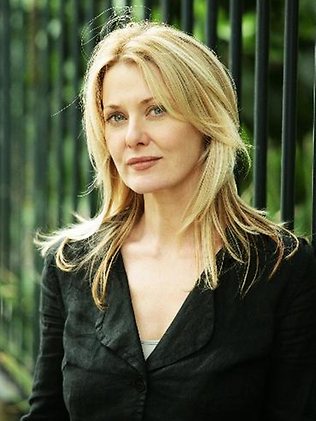
ImageGen.ashx“When Hitler came to power I was in the bath.” The sentence shocks with its indulgence – the bather’s husband is in the kitchen crushing limes for mojitos – as it conjures the vulnerability of naked flesh against the army of jackboots that are about to descend upon Europe.

It also happens to be the first sentence of Anna Funder’s debut novel, All That I Am, which has had a busy time of late garnering literary awards and accolades. In addition to winning the Indie Book of the Year award, the Australian Book Industry Book of the Year, and the $35,000 Barbara Jefferis Award, it has been shortlisted for the $80,000 Prime Minister’s Literary Awards for fiction.

All of which has fuelled speculation that All That I Am is a front-runner for this year’s Miles Franklin Award, which will be announced on Wednesday night in Brisbane.

Funder’s novel follows her impressive non-fiction title, Stasiland: Stories Behind the Berlin War, which presented first-hand accounts of life in the former German Democratic Republic. Whereas in Stasiland, Funder focused on post-war Germany, in All That I Am she has turned her attention to the decade preceding the war when Europe resolved – as left-wing German playwright Ernst Toller put it – “to hurl herself into the abyss of suicide”.

The narrative centres on a coterie of German dissidents – cousins, Ruth Becker and Dora Fabian, and their respective lovers, Hans Wesemann and Ernst Toller – whose political agitating against Hitler and his Third Reich necessitated their hasty departure from Germany and their subsequent resettlement in London as refugees.

The persecution the exiles suffer unfortunately doesn’t stop at the Channel, and their story builds to a harrowing – and tragic – denouement.

Funder came to the story through her friendship with Ruth Blatt, the novel’s dedicatee whose extraordinary life inspired the character of Ruth Becker.

Ruth – the sole survivor of the group – spent five years in solitary confinement in a German prison before securing her passage to Australia (via Shanghai) in 1947. She lived the next fifty years of her life alone in a flat in Bondi Junction. Funder has said:

In conversation, Ruth would move from criticising Hitler to criticising our own government at the time, in a way that made it clear that when you are living through something, there are some people who can see things for what they are (whether that’s dire, or just moderately unpalatable), and will always speak out. It is this kind of courage that fascinated me, along with the moral compass that underlies it.

All That I Am is a novel that questions the ubiquity of the human conscience, yet it insists on its cultivation. We ignore our conscience – or allow its distortion – at our peril. History shows that the consequences can be mighty.

As WH Auden (who makes a cameo appearance in Funder’s novel) writes in his poem, “In Memory of Ernst Toller”: 

We are lived by powers we pretend to understand:
They arrange our lives; it is they who direct us at the end
The enemy bullet, the sickness, or even our own hand.

It’s true All That I Am is a dark novel, but as history and a warning there aren’t many more important.

The Conversation

This article was originally published at The Conversation.
Read the original article.

you might also like

XX chromosomes returned to the Miles Franklin
Poetry takes down Günter Grass
Ondaatje: a lion at the cat’s table

XX chromosomes returned to the Miles Franklin

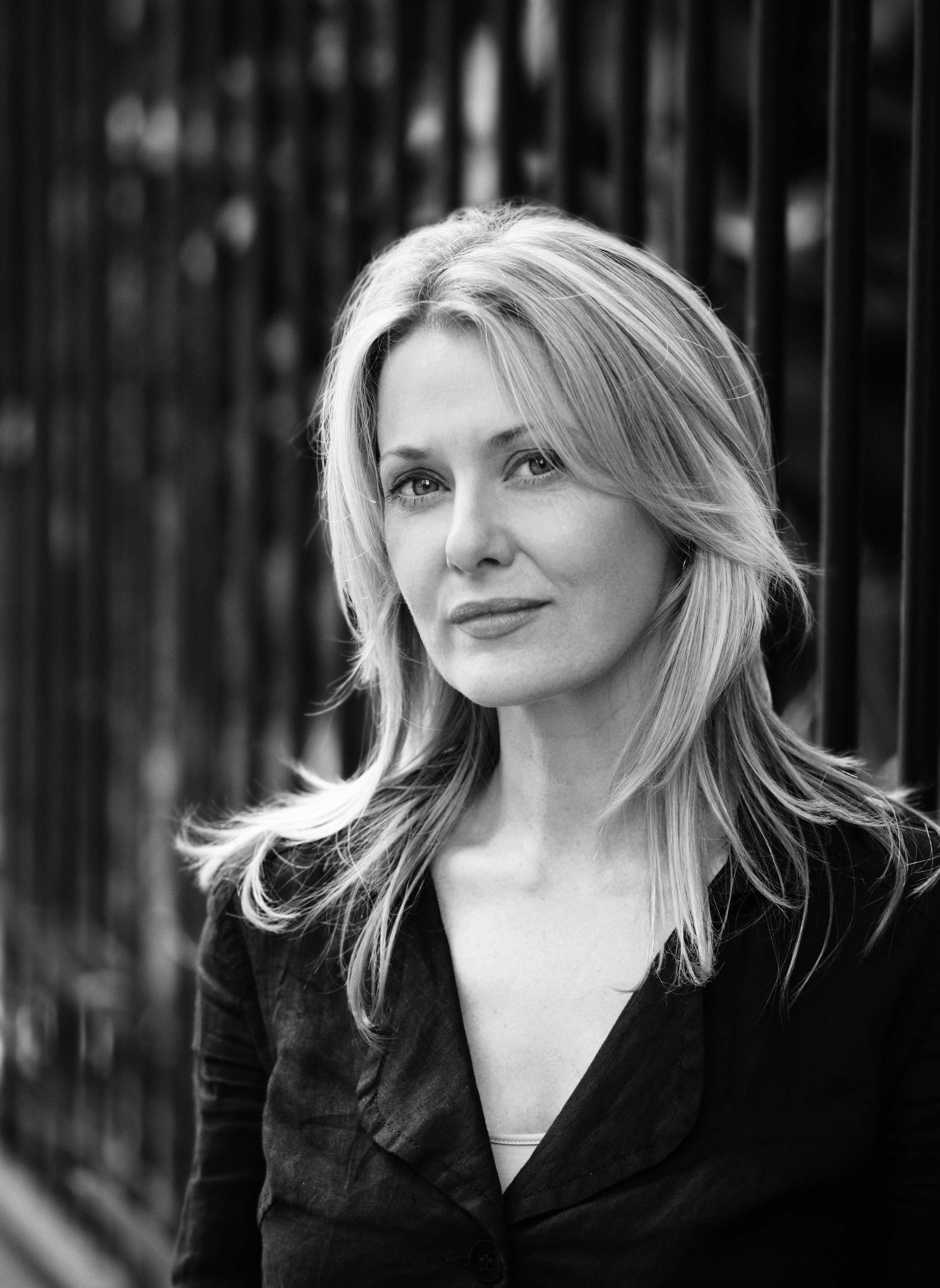
439628-anna-funderJust because it’s the debate we had to have, didn’t mean it wasn’t going to hurt.

The fracas began in 2011 when the Australia’s most prestigious literary award, the Miles Franklin, unveiled its all-male shortlist.

The gender imbalance might have gone unnoticed, if it hadn’t coincided with the latest VIDA research that revealed an alarming under-representation of female authors and critics in international literary pages.

Back in Australia, female authors were horrified to find VIDA’s inequities replicated in Australian publications. In sharp response, Sophie Cunningham and a handful of writers, publishers and commentators decided to do something about the lack of profile accorded female authors.

The result is a $50,000 literary prize for a book in any genre by a female Australian author: The Stella Prize. The eponymous award retrieves the given-name Miles Franklin believed she needed to suppress in order to be taken seriously as a writer.

Forwarding a year, Professor Gillian Whitlock announced, at the Mitchell Library in Sydney today, a very different Miles Franklin shortlist for 2012:

Speaking on behalf of the judging panel, Whitlock framed the shortlist in terms experience rather than gender: “The breadth of the shortlist includes well-known and loved Australian authors, as well as featuring two wonderful first-time novelists.”

She also highlighted the power of historical fiction (Funder and Moore) and an observable turn to trauma narratives and childhood (Birch, Mears and Parrett).

Debates on gender – along with the concurrent debate on the invisibility of Australian literature – are useful and will lead to greater understanding of our literary milieu. But it would be a travesty if these conversations were to throw doubt over the merits of the female authors shortlisted amid the uproar.

Frank Moorhouse is the heavy hitter on the list, but from what I hear the contest is still very much alive. The winner will be announced in a ceremony at the State Library of Queensland in Brisbane on 20 June.

The Conversation

This article was originally published at The Conversation.
Read the original article.

You might also like

Powers we pretend to understand: Anna Funder’s All that I Am
Poetry takes down Günter Grass
Carrie Tiffany wins a Stella Prize of her own
New Queensland literary award, no thanks to Newman


The Vogel: what’s age got to do with it?

Most writers will admit they’d never get anything done without the pressure of a good deadline. And for unpublished writers there’s no bigger deadline on the Australian publishing calendar than that of the The Australian/Vogel Literary Award. To be clear, the big day is not the June deadline when the call for entries closes each year, but the deadline that comes only once in a lifetime on the eve of a writer’s 35th birthday. As the clock strikes midnight on this inauspicious day, unpublished writers graduate from “young and unpublished” to officially “old and unpublished”. At least that’s the message the Vogel Award – which comes with $20,000 and a publishing contract with Allen & Unwin – delivers when it bars writers 35 and up from entering the competition.

4857101224_614d21aecdMost writers will admit they’d never get anything done without the pressure of a good deadline. And for unpublished writers there’s no bigger deadline on the Australian publishing calendar than that of the The Australian/Vogel Literary Award.

To be clear, the big day is not the June deadline when the call for entries closes each year, but the deadline that comes only once in a lifetime on the eve of a writer’s 35th birthday.

As the clock strikes midnight on this inauspicious day, unpublished writers graduate from “young and unpublished” to officially “old and unpublished”.

At least that’s the message the Vogel Award – which comes with $20,000 and a publishing contract with Allen & Unwin – delivers when it bars writers 35 and up from entering the competition.

Happily that’s not something Paul D. Carter needs to worry about now that John Birmingham has declared Carter’s novel, Eleven Seasons, this year’s Vogel winner. Although at 32 years of age, he must have felt his “authorial clock” ticking.

Fortunately an author’s clock is a social contruction, not a deadline set in DNA. Literature is one of the few arts in which its practitioners regularly improve with age, and it’s also one of the few to permit a late beginning.

Annie Proulx – of Shipping News fame – was 57 when her first novel, Postcards, came out in 1992. Frank McCourt didn’t publish his first book, Angela’s Ashes, until he was 66. David Malouf was 44 when Johnno appeared in 1975, although he was a published poet by that time.

Other late bloomers include Anthony Burgess, 39, for Time for a Tiger (A Clockwork Orange appeared when he was 45); William Burroughs, 39, for Junky; and Henry Miller, 44, for Tropic of Cancer. Raymond Chandler published his first novel, The Big Sleep, at 51 years of age.

And so the list of great authors who would have been unable to satisfy the Vogel’s eligibility requirements (era and citizenship notwithstanding) goes on.

To be fair, a good number of Australia’s leading novelists did manage to meet the deadline and kick-start their career with a Vogel win: Tim Winton, Kate Grenville, Mandy Sayer, Andrew McGahan, to name just a few.

And two of Australia’s greatest novelists, Patrick White and Christina Stead, both would have been contenders for a Vogel win (had it existed in their time), with their first novels appearing at ages 27 and 32 respectively.

The problem with the Vogel age-limit is not that it’s ageist, but that it’s arbitrary. And that’s what makes it meaningless.

Why 35? The cut-off in the early years of the award was 30, but it was raised in 1982, presumably to attract better quality entries. But why didn’t the executors raise the cut-off to, say, 34 years?

Or perhaps 36 so that this year’s shortlisted writer, Clare Carlin – who has since turned 35 – could have been eligible to enter in 2013. A manuscript, if it’s any good, doesn’t it become irrelevant overnight.

The Vogel is the 1980 brainchild of Niels Stevns, the owner of Vogel’s Bread in Australia, who had a passion for literature. Since he put up the idea and the money, he rightly got to decide the rules.

(Conceivably a benefactor could establish an award for writers whose last names start with F, and if it’s not our money at stake we’d all have to live with the idiosyncrasy.)

But if the intent behind the Vogel is to grant aspiring authors entry into the publishing industry, then a 51-year-old writer (the age of the Marquis de Sade when he published his infamous first novel, Justine) is just as in need of assistance as a 31-year-old.

The rules of the Vogel have changed over the years: due dates, prize money, number of judges, publishing schedules and so on. Why not keep spirit of the prize by retaining the criterion that a writer be unpublished, but cross out the barrier of age?

There’s a famous anecdote – possibly apocryphal – that has Canadian author Margaret Atwood at a cocktail party. A brain surgeon tells her he’s going to write a novel when he retires.

“That’s interesting,” Atwood is purported to say, “when I retire I’m going to take up brain surgery.”

Atwood’s point is that writing a novel is a specialty art that requires skill and years of training to perfect. Good novels rarely just appear but are earned by hard work over a long period of time.

But what the anecdote fails to acknowledge is that most of us are more skilled with a keyboard than a scalpel – and a good story can be told at any age.

The Conversation

This article was originally published at The Conversation.
Read the original article.

Poetry takes down Günter Grass

Günter Grass

The world of political poetry has suffered some significant losses in recent months. Václav Havel, a poet long before he was the last president of Czechoslovakia and the first president of the Czech Republic, died in late December 2011.

Although many of Havel’s poems were whimsical “concrete” poems, a good number were pointedly critical of Czechoslovakian society and politics of the time. These works, along with his other dissident activities, landed him in jail from 1979 until 1984.

February this year saw the death of the Polish poet and Nobel laureate, Wislawa Szymborska, whose poems chronicled Polish history from WWII, through Stalinism and beyond. “My poems are strictly not political. They are more about people and life,” Szymborska once remarked, “but, of course, life crosses politics.”

Feminists – and certain political regimes – have long believed that the personal can be very political indeed. It’s a message reiterated by Adrienne Rich, one of America’s most influential contemporary poets, whose poetry books have sold close to a million copies.

As a woman and a lesbian of Jewish descent, Rich was concerned with the politics of identity long before the idea became de rigueur. Poetry is a map, she declares in her poem, “Dreamwood”: not a revolution, “but a way of knowing / why it must come”. Rich’s death on 27 March dispatched a wave of mourning around the world.

The marriage between poetry and politics has a long history. Archilochus wrote some of the earliest political poetry, and Horace’s tribute to Augustus’s principate in the Roman Odes is among the greatest political poetry ever written.

While much of the earliest political poetry was written in tribute to leaders, much of contemporary political poetry is written in protest.

Robert Hass, American poet laureate (1995-97), elucidates the contemporary view: “I think the job of poetry, its political job, is to refresh the idea of justice, which is going dead in us all the time.”

Nevertheless, political poetry can be difficult for the critic to esteem. Harold Bloom held it to the highest measure in his attack on The Best American Poetry 1996 anthology, edited by Adrienne Rich, calling it “a stuffed owl of bad verse”. He was unable, he claimed, to find in it more than an authentic poem or two.

“It is of a badness not to be believed, because it follows the criteria now operative: what matters most are the race, gender, sexual orientation, ethnic origin, and political purpose of the would-be poet. Sincerity, as the divine Oscar Wilde assured us, is not nearly enough to generate a poem.”

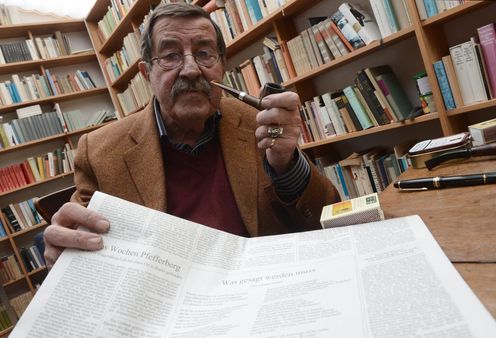
Yet sincerity is precisely the stuff of which Günter Grass’ incendiary poem, “What Must Be Said”, is made. The poem’s argument is two-fold. First, Israel’s nuclear arsenal is a threat to the Iranian people and “endangers an already fragile world peace”;

Second it argues why for a long time he has felt unable to voice his fears owing to a greater fear of being punished for the sins of his German forefathers:
But why have I kept silent till now?

Because I thought my own origins,
tarnished by a stain that can never be removed,
meant I could not expect Israel, a land
to which I am, and always will be, attached,
to accept this open declaration of the truth.

Despite his declared attachment to Israel, Grass was right to worry. The poem caused a tremendous ruckus when it appeared on 4 April in several European newspapers.

It demonstrated decisively that poetry can “make things happen” after all, on 8 April Israel declared Grass a persona non grata and denied him future entry into the country.

Israeli Prime Minister Benjamin Netanyahu said the poem’s allegation that Israel poses a greater threat to world security than Iran – “a regime which denies the Holocaust and calls for Israel’s destruction” – is a “shameful moral equivalence”.

Grass was quick to apologise for the wording in his poem: instead of saying Israel, he should have said “the Netanyahu government”.

Despite the brouhaha the poem has incited, most critics agree it isn’t particularly good. Heather Horn, who translated it from German, chided its “needlessly Teutonic constructions” and “winding and parenthetical tone”.

Someone once said publishing a poem is like throwing a feather off a cliff and waiting for the thud. In Grass’ case the feather turned out to be an elephant and he was standing under it.

The absurdity of fuss generated by an average-at-best poem would be amusing, were it not for the toll it appears to have taken on Grass’s health.

On Monday this week – two weeks after the poem’s publication – Grass was admitted with suspected heart problems to a hospital in Hamburg. “There’s no danger to his life,” his doctor said in a written statement, assuring the world that the 84 year-old poet would return home by “the end of the week at the latest.”

In some societies – past and, sadly, some present – poets pay with their lives for the gall of social critique.

Putting politics aside, let’s hope Günter Grass’s price will not be so costly.

The Conversation

This article was originally published at The Conversation.
Read the original article.

Behind the toilet door: poetry and space

"Occupation" by Lisa Gorton. Illustration by Art is not found only in the painter’s studio or in the halls of a museum, it also has its place in the store, the shop, the factory and the home. In fact, when art is reserved as the province of professional artists, a dangerous gulf develops between the fine arts and the everyday arts. The fine arts are elevated and set apart from life, becoming too precious and therefore irrelevant. Having banished art to the museum, we fail to give it a place in ordinary life. One of the most effective forms of repression is to give a thing excessive honour — Thomas Moore, ‘The Sacred Arts of Life’

I want to repeat the last of these sentences by Thomas Moore because it interests me: “One of the most effective forms of repression is to give a thing excessive honour”. And also because it confronts me. There exists in my mind—and likely the minds of others who’ve cared to dwell on such things—a contest between art, or more specific to this conversation, poetry, as something special, something heightened, something that holds within it a promise of the sublime, and poetry as something quotidian, ordinary, an essential part of our everyday culture: a way of communicating and recording things that matter to us. Nowhere is this distinction more conspicuous, perhaps, than when poetry is made manifest in print. As for me, I am in love with the letterpress, with creamy linen paper, with section-sewn books printed in fonts shaped by a fifteen-century monk who knew that ascenders and serifs could make the human heart, properly attuned, swoon. I am taken with books that carry within them some sign that a human hand was involved. Like many, I mourn the disappearance of the hand in the objects of our everyday. The pleasure that comes from touching and reading a fine, hand-made book is akin to that of preparing and eating a gourmet meal. Poets have long felt that words—or at least the right words in the right order—deserve more than a stack of cheap paper in a stapled cover.

But I’m also a believer in the idea that poems shouldn’t only be available in expensive and hard-to-get-hold-of book format. More than thirty years after the fact, I am persuaded by the premise underpinning David Malouf’s Paperback Poets proposal to University of Queensland Press: poetry books, he argued, should not be unnecessarily luxurious; they should be affordable and readily available. When Malouf offered his first collection—Bicycle and Other Poems—to UQP, it came with the stipulation that the book not be released in hardback and that it sell for no more than a dollar. To his surprise, UQP agreed to his terms. And why not? It was a terrific and timely idea. It helped make poetry accessible to young people in the sixties and seventies, who wanted to read the poems of their peers, and print runs for these books ran in the thousands.

Since those days, we’ve witnessed the burgeoning of poetry in cyberspace. This is, arguably, a more democratic space than ever before imagined, and readership—or “traffic” as we’ve now come to call readers—is measured not in print runs but page hits, which for some sites count in the tens of thousands (or more) every month (just think of John Tranter’s Jacket). In the classless world of cyberspace, there is no such thing as an original: digital files can be replicated relentlessly and flicked around the world without any threat to the quality of reproduction. What we lose in aesthetics—tangibility, the mark of the human hand—we make up for in accessibility, convenience and speed. While books may go out of print after only a couple of years, cyberspace evolves at a dizzy rate (Darwin on speed) and websites are deleted at the whim of webmasters and content rewritten, replaced, deleted overnight. Already, libraries, cognizant that much of popular culture documentation now exists only on the net with no print counterpart—and is therefore at risk of being lost forever—have set about archiving websites as fast as their staff and budgets can manage. In all likelihood, and not too far into the future, archival libraries, such as the Fryer at the University of Queensland, will be stacked not with pencilled and coffee-stained manuscripts, but with memory sticks and computer hard drives, complete with an author’s web surfing patterns (which may or may not include porn sites), their search histories, and e-mail correspondence.

But the solution to this contest is not a pitting of the extraordinary against the ordinary. Neither is it some kind of happy medium—some sort of in-between space where the strength of each position is retained but only at the sacrifice of flavour and quirk. Of course there’s a lot to be said for pragmatism, but I think a better answer lies in stretching the space of the extraordinary so that it ropes in the ordinary. I want to see poetry in museums—I’m thinking of Gilgamesh on cuneiform tablets and illuminated books in glass cases—in libraries and university classrooms. I want to read poetry typeset in hardcover books, but I also want to find it on websites in san-serif fonts, on buses, on television, radio, in shops, airports, and cinema toilets.

We now occupy a space that is infiltrated by global multimedia to a point where our mental environment is one of the last stands of private space. People need poetry to help them resist the onslaught. People need poetry, as the Russian poet Andrei Voznesensky says, to stop us becoming robots. “Poems let us enter a private space in which time slows down and possibilities expand. In that space, we’re allowed to be tentative, instead of being asked to sign on the line, answer the phone or pick up a weapon”, as David Orr says. Poetry’s greatest task, I think, is to foster a necessary privacy in which the imagination can flourish. And here, I’d like to spin on the word “privacy” to introduce the toilet cubicle into the conversation.

Like the mind, the toilet cubicle can serve as a sanctuary from the encroachments of the modern world. It is presumed, for instance, to be a camera-free zone. Toilets are a place to do something in private. But toilets are not always used for conventional purposes. Toilets can also function as displaced versions of the spy’s secret rooms. American anthropologist Alan Dundes, in his essay “Here I Sit—A Study of American Latrinalia” (a coinage referring to markings including art, drawings and poetry made by humans on bathroom walls—a joke on the internet said Dundes prefers this coinage to “shithouse poetry”, which I will let stand as the one and only instance of bathroom punning to be heard in this discussion), saw the public bathroom (which houses the toilet cubicle) as a bastion of taboo-breaking expression. There is a sense, albeit coded, that the toilet cubicle is a site for the return of the repressed (or at least the suppressed): people enter a bathroom and buried truths emerge.

But what happens when a poem enters a toilet cubicle? What does this context add to the reading of the poem? These are things that interest me. I imagine, for one, that there might be surprise on behalf of the sitting reader, and possibly bemusement. Hopefully amusement. There would be less pressure on the poem for it to be understood, I would think, as most people would need to be on their way soon enough. People owho don’t like poetry tend to fear nonsense, but this context, I think, might lend a necessary levity to language. I would also like to think that in the private space of the toilet cubicle, the reader in his or her semi-nakedness might hear something real—something more than just information, something real about life and about dreams.

  • As in the poem “Occupation” by Lisa Gorton, which takes us inside an airport toilet cubicle—an upright casket—where we can sit like a buried Vestal, blank as a shiny white tile. Here there is space for us—there’s no one else to be but yourself—we are offered a freedom from intention, an empty space in which to talk and to listen.
  • Or in “Before Tomorrow” by Elizabeth Allen, which would seem to point to today—now—a moment in time, wherein “a thin space between breath and thought” is suspended only long enough for a drop of rain to run down a woman’s left ankle. It’s pure existence, no rationale. The poem has us enter the mind of night, which is the radical freedom of comparing ourselves to nothing.
  • Then there is “Small Days” by Liam Ferney, where our sense of significance is radically destabilised. Life’s marginalia swallows up the centre and we wake alone and lonely on a Sunday to see the morning sun lap over the linoleum, we see ourselves through toothpaste smudges on a mirror, and shower while surreal toddlers scramble in the streets.
  • “Hanami” by Ed Wright is as good a guide as any to elegant living. We are in Japan. It is spring. Cherry blossoms are a beautiful reminder of death. They drift and pirouette like pink snowflakes, and are stacked by the wind while students drink sake and disappear into a love hotel.
  • “Subtle Plague” by Keri Glastonbury carries more of a sting. Its lack of punctuation causes a slippage where sense and sentences charge into one another to create an ambiguous grammar, in much the same way as cities spill into countryside causing the ambiguous syntax of suburban sprawl. Here there’s a nostalgia for quiet paddocks, something more stellar, we’re told, than even late night shopping.
  • And finally, “The Glacier” by Andrew Slattery puts us in a small boat at one of the poles, where a marble-like glacier veined with the dirt of creation rises out of flat water, fractures, and a column slides into the water, causing the boat to rise a little bit as you feel the arctic weather cool on your arms. Time, we sense, is both particle and wave and the instance echoes through history.

When we are in the poetic space we could be anywhere, out in nature, in someone else’s house or at work, in an airport or cinema toilet, and still we can feel at home. All that is required is to truly inhabit the space. The word inhabit comes from a root that means to give and to receive. We inhabit a place when we give something to it and when we open ourselves to receive what it has to offer. Some places don’t seem to have much to give, or what they have is not something we’re inclined to receive, and so it may be difficult to inhabit them. But this project—which gives space to poetry so that poetry might give us space—goes some way toward rectifying this. The poems that will soon dignify the toilet doors of airports and cinemas across the country do all the things poems should do. They please as they do as they please. They deliver what we hadn’t thought to ask for. They confront and confound and inspire. They announce and protect the private territory of self, exercise parts of the mind and memory petering out for want of use. They are humble, unpretentious, make no claims beyond themselves. For their ordinariness I am inclined to praise them. But not too much. Each poem makes a little space in the imagination from which we might love the world— splendour, foibles, all—a little bit more. Or at least we might look at it, ourselves, our lives, a little more attentively.

_

On April 1st 2006, a live event was held at Customs House, Circular Quay, featuring the six poets reading their poems and a cubicled reading space built for the occasion. The event also featured the inaugural Mineslec, Red Room’s annual mini-essay-lecture to be commissioned annually from a poet and delivered to a live audience. Poet and critic Bronwyn Lea presented her thoughts on the topic of poetry and space. The live recording of the poets was broadcast by the Community Radio Satellite in May 2006, and the poem posters were displayed at the following venues: Qantas domestic terminals – Sydney, Melbourne, Brisbane and Perth; Greater Union and Village cinemas – Melbourne, Sydney, Brisbane, Gold Coast & Sunshine Coast, Perth and Adelaide.