Rhyll mcmaster’s ‘mere self’

Review of Late Night Shopping by Rhyll McMaster

Broadly speaking, there are two types of epitaphs: those formulated by loved ones to describe the living qualities of the interred; and those that would presume to speak from the grave. Writers, ever reluctant to pass up a blank page – even if it is a tombstone – are disproportionate constituents of the latter. H.G. Wells, father of science fiction, penned his epitaph: ‘Goddamn you all: I told you so.’ Dorothy Parker quipped ‘Excuse My Dust’, while Charles Bukowski, abandoning humour for something bleaker, counselled: ‘Don’t try.’ Rhyll McMaster, who happily still dwells among the living, claims her epitaph will one day read: ‘No-one knows.’

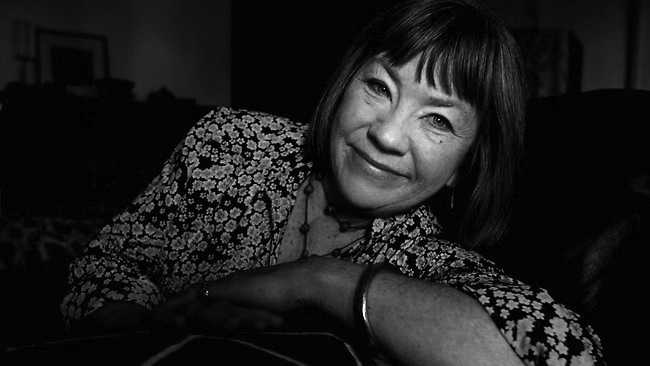
753891-120707-rev-rhyllBroadly speaking, there are two types of epitaphs: those formulated by loved ones to describe the living qualities of the interred; and those that would presume to speak from the grave. Writers, ever reluctant to pass up a blank page – even if it is a tombstone – are disproportionate constituents of the latter. HG Wells, father of science fiction, penned his epitaph: “Goddamn you all: I told you so.” Dorothy Parker quipped “Excuse My Dust”, while Charles Bukowski, abandoning humour for something bleaker, counselled: “Don’t try.” Rhyll McMaster, who happily still dwells among the living, claims her epitaph will one day read: “No-one knows.”
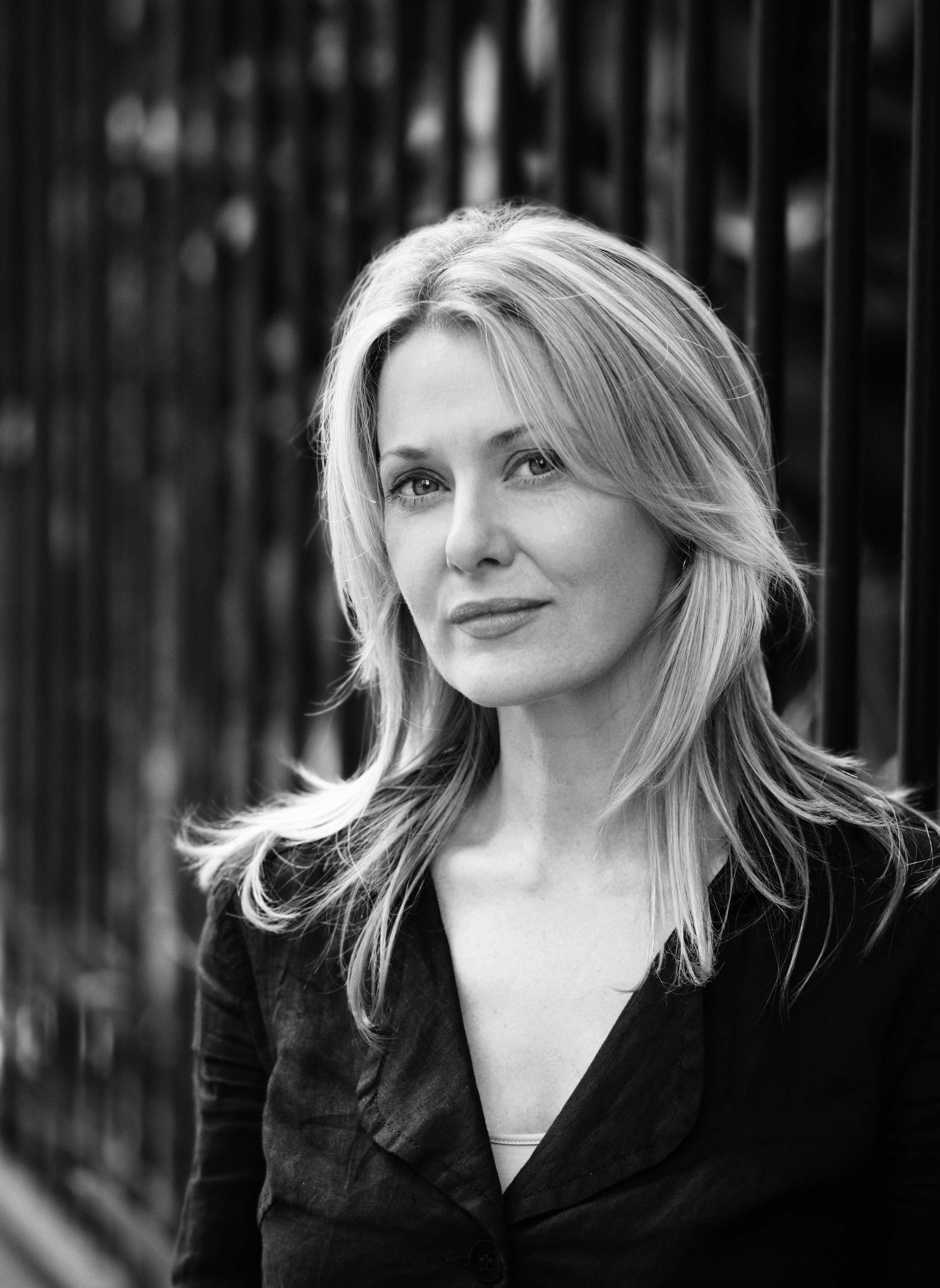
McMaster’s sixth collection of poems, Late Night Shopping, pursues a philosophical line of questioning present since her earliest work: “What is death?” and, trickier still, “What does it mean to be alive?” The collection opens with a brilliant, if confronting, poem, “The Shell”, that describes a woman’s death in unflinching detail: “After that rasping second when the woman died / she was bleached pale on the surface like a sponge.” When a nurse-aide touches the woman’s skin it is “leached fibrous”, her blood is “drained from the periphery / to pool centrally” like “a rusting lake’’ The woman’s “mere self” is gone, “no longer atomically spinning”: she is “a hardening shell, a celluloid doll”. When the nurses try to slip her dentures in, they don’t fit. The poem concludes:

On edge, we laughed.
There was no disrespect – she wasn’t there.
The formality of death is due to emptiness.
When molecules cease their high humming
dark space appears.
It radiates in waves and disperses in continuous air.

McMaster’s struggle to wrap her mind around the idea of death not only informs her subject matter, but also delivers the fuel needed to get the poems running. In an elegy for her father, “His Ordered World”, the speaker looks around his empty workshop and puzzles that his hands were once alive on the now inert slide-rule. Death, she concludes, “senses fear of immensity” and “invades the space / of serious human error where terror lives”.

McMaster has a habit of looking at the human body – dead or otherwise – and finding it unceasingly strange. In ‘Within Creation’, a poem from an earlier collection, the speaker studies her hands with esoteric detachment: “What are moons / on fingernails,” she asks; “what is your purpose in my life?” Engaging the uncanny, she imagines a reply: “We make you wonder,” the moons scream softly, “at our clean and / meaningless design”. In McMaster’s godless world, philosophy is no consolation: it is merely a game that stops us thinking of the roaring void of the universe, she argues elsewhere, and “of the image of the box / the inrush of gas / to the crematorium flame”.

McMaster’s poems are frequently informed by the latest findings in science – biology, genetics, physics, quantum mechanics – and metaphors of science are McMaster’s preferred methodology for creating awe. In “Re-Arrangement in the Emporium” – a strange poem dedicated to Francis Crick, co-discover of DNA – McMaster contemplates the infinite convolutions of double-helix pairings (and flags her impressive skills as an imagist): “There will never be another / piece of furniture like me”, the speaker asserts. The world is “a hall of settings”, she continues, “rotating in limbic space”:

Head tucked over knees
we wheel and pulsate,
endless atoms
streaming from our heels.

Time and again, McMaster shows that just as truth is sometimes stranger than fiction, science can be weirder than religion. In an ode to the human gene – “luminescent tors on the night road” – McMaster returns her gaze to her hands. Hands, as anatomical structures, are replicated generation after generation, but they themselves “do not prevail”. Immortality through replication is the sole domain of the gene: “We have been here,” the genes expound, “sinuous furrows on water / perhaps for ever”. Humans – our mind and body included – are servants to the longer processes life. “You are our spoken word,” the gene continues, “Through you, we are made manifest.”

It would be unfair to give the impression that Late Night Shopping is in its entirety a dark meditation on death. There are also daylight poems of love, art, and rural life, yet these poems function more like interludes than pinnacles. At her best, there is an attractive hard-headedness about McMaster. Her poems are a showcase for the mind at work – not just a person having thoughts, but someone really thinking. In a climate in which so many poets seem intent on dissembling meaning, it is a relief to find one intelligently engaged in its pursuit. McMaster knows too well there is no “reality” – we are condemned to the mere wisps of data the senses can deliver to the brain – but her uncanny ability to describe such a state of unknowing puts her among the more interesting poets writing today. Late Night Shopping is, as they say in the poetry business, “a slim volume”: I only wish that, like life, it were a little longer.

Originally published under the title “The Mere Self” in Australian Book Review 340 (MAY 2012): 64

Powers we pretend to understand: funder’s all that I am

Review of All that I Am by Anna Funder

“When Hitler came to power I was in the bath.” The sentence shocks with its indulgence – the bather’s husband is in the kitchen crushing limes for mojitos – as it conjures the vulnerability of naked flesh against the army of jackboots that are about to descend upon Europe. It also happens to be the first sentence of Anna Funder’s debut novel, All That I Am, which has had a busy time of late garnering literary awards and accolades. In addition to winning the Indie Book of the Year award, the Australian Book Industry Book of the Year, and the $35,000 Barbara Jefferis Award, it has been shortlisted for the $80,000 Prime Minister’s Literary Awards for fiction.

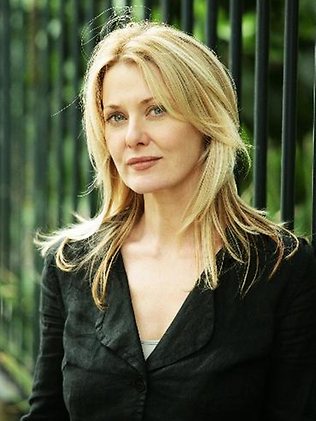
ImageGen.ashx“When Hitler came to power I was in the bath.” The sentence shocks with its indulgence – the bather’s husband is in the kitchen crushing limes for mojitos – as it conjures the vulnerability of naked flesh against the army of jackboots that are about to descend upon Europe.

It also happens to be the first sentence of Anna Funder’s debut novel, All That I Am, which has had a busy time of late garnering literary awards and accolades. In addition to winning the Indie Book of the Year award, the Australian Book Industry Book of the Year, and the $35,000 Barbara Jefferis Award, it has been shortlisted for the $80,000 Prime Minister’s Literary Awards for fiction.

All of which has fuelled speculation that All That I Am is a front-runner for this year’s Miles Franklin Award, which will be announced on Wednesday night in Brisbane.

Funder’s novel follows her impressive non-fiction title, Stasiland: Stories Behind the Berlin War, which presented first-hand accounts of life in the former German Democratic Republic. Whereas in Stasiland, Funder focused on post-war Germany, in All That I Am she has turned her attention to the decade preceding the war when Europe resolved – as left-wing German playwright Ernst Toller put it – “to hurl herself into the abyss of suicide”.

The narrative centres on a coterie of German dissidents – cousins, Ruth Becker and Dora Fabian, and their respective lovers, Hans Wesemann and Ernst Toller – whose political agitating against Hitler and his Third Reich necessitated their hasty departure from Germany and their subsequent resettlement in London as refugees.

The persecution the exiles suffer unfortunately doesn’t stop at the Channel, and their story builds to a harrowing – and tragic – denouement.

Funder came to the story through her friendship with Ruth Blatt, the novel’s dedicatee whose extraordinary life inspired the character of Ruth Becker.

Ruth – the sole survivor of the group – spent five years in solitary confinement in a German prison before securing her passage to Australia (via Shanghai) in 1947. She lived the next fifty years of her life alone in a flat in Bondi Junction. Funder has said:

In conversation, Ruth would move from criticising Hitler to criticising our own government at the time, in a way that made it clear that when you are living through something, there are some people who can see things for what they are (whether that’s dire, or just moderately unpalatable), and will always speak out. It is this kind of courage that fascinated me, along with the moral compass that underlies it.

All That I Am is a novel that questions the ubiquity of the human conscience, yet it insists on its cultivation. We ignore our conscience – or allow its distortion – at our peril. History shows that the consequences can be mighty.

As WH Auden (who makes a cameo appearance in Funder’s novel) writes in his poem, “In Memory of Ernst Toller”: 

We are lived by powers we pretend to understand:
They arrange our lives; it is they who direct us at the end
The enemy bullet, the sickness, or even our own hand.

It’s true All That I Am is a dark novel, but as history and a warning there aren’t many more important.

The Conversation

This article was originally published at The Conversation.
Read the original article.

you might also like

XX chromosomes returned to the Miles Franklin
Poetry takes down Günter Grass
Ondaatje: a lion at the cat’s table

Foreword: australian poetry journal 2.1 #technology

There are two types of people, I once wrote in a poem that riffed on the classic binary: those who are turned on by cutting-edge technology; and those who warm to it only after it is obsolete. The latter, the poem continues, ‘often exhibit great affection for manual typewriters and vinyl records’. Of course, the human relationship to technology is infinitely more varied than this construction would allow, yet it is not unreasonable to speculate that Luddism, as a viable response to our machine-mad world, is in dramatic decline.
Technology (from the Greek tekhnē, meaning ‘art, skill, or craft’) refers to both the tools by which we live – computers, televisions, cars, pianos, pens, heart monitors, fertilizers, machine guns – and the thinking behind them.

volume 1 issue 1

2012

There are two types of people, I once wrote in a poem that riffed on the classic binary: those who are turned on by cutting-edge technology; and those who warm to it only after it is obsolete. The latter, the poem continues, ‘often exhibit great affection for manual typewriters and vinyl records’. Of course, the human relationship to technology is infinitely more varied than this construction would allow, yet it is not unreasonable to speculate that Luddism, as a viable response to our machine-mad world, is in dramatic decline.

Technology (from the Greek tekhnē, meaning ‘art, skill, or craft’) refers to both the tools by which we live – computers, televisions, cars, pianos, pens, heart monitors, fertilizers, machine guns – and the thinking behind them: information technology, music technology, biotechnology, medical technology, and so on. Technology influences not only how poets generate and compose poems –  NASA’s ballpoint pen or an Apple computer – but also the modes and processes by which we distribute and consume them. Paradoxical by nature, poetry is at once our most low- and high-tech of literary arts. For millennia poetry has lived with little more than the human body as its instrument (and warehouse), yet while other literary artforms – the novel, say, or the play – struggled to imagine a home in an online world, poetry logged on, making easy concessions and tweaking software to its design and purposes.

Ideally, an initial reading of the poems in this (or any) issue of Australian Poetry Journal would be unencumbered by a thematic frame so that the poems may be appreciated for their full spread of ideas and refracting nuances. Later readings, with the theme held in mind, might then open the poems to additional interpretations. Some poems in this selection are pointedly concerned with technology (or its lack): John Carey’s ‘Money’, for instance, laments currency’s sonic shift from the concrete jingle of coins and rustle of notes to the abstract and super-silent highways of electronic transfers; Amy Brown’s ‘Lungs Like Birds’, takes consumption – that merciless killer of nineteenth-century poets – as its subject and stages a ‘miracle cure’ (long before the advent of antibiotics: the greatest life-saving technology in the history of modern medicine); while John Kinsella’s ‘Grantchester Genetically Modified Plough Play’ – which will be staged in Cambridge around the time of this issue’s release – employs a plough-play in verse (traditionally performed in fields by farmhands) to skewer biotech giant, Monsanto, who has been busy making machines of our food.

Other poems only glimpse the theme: Dominique Hecq’s ‘Portrait in Conversation’, for example, is principally a rumination on angel wings, but its conversation is triggered by a print reproduction of da Vinci’s Annunciation. Likewise, technology in Cameron Fuller’s suburban pastoral, ‘Stress Fractures’, is present only as soundtrack – the groan of a lawn mower, distant sirens after a fight – to the poem’s main event of memory and self dissolution. Sometimes technology makes its way into a poem only to nestle as a curio inside the line: there’s an AK-47 in Geoff Page’s ‘Archetypes’; a rifle in Mal KcKimmie’s ‘Twins’; a Heckler & Koch in Ron Winkler’s ‘And Later On’; and magazine debris, shells, and shrapnel in Sudeep Sen’s stunning ‘Kargil’ poem, set ten-years on from the India-Pakistan conflict of 1999. Likewise, instruments of malice are showcased in Mike Ladd’s ‘Museum of Memory’, and elsewhere technology detritus shows up in Julie Maclean’s ‘Farina Farina’ with ‘the shell of a Holden’ nudging the ‘corrugated lean of a water tank’. For some readers, Ron Winkler’s ‘Berlin’ will be seen as a technology-free haven, but only to those unburdened by the responsibility of keeping a city lawn watered and green.

In the half year since APJ’s inaugural issue, we have received word of approximately 75 new poetry titles (unfortunately more than we could ever hope to review here). In ‘Forensics and Makeshift Rafts’, Michael Sharkey admires the technical achievements of three new collections: The Raft by Leopold Hass (editorial paranoia compels a nod to the pseudonym); Kingdom Animalia by New Zealand poet and botanist, Janis Freegard; and The Welfare of My Enemy, which Sharkey upholds as Anthony Lawrence’s most admirable collection to date. Jaya Savige sizes up the Geoffrey Lehmann and Robert Gray treasury, Australian Poetry Since 1788, with an eye to learning ‘from whence we came’ – not from Queensland he concludes (among other things), having done the sums – and logs a request for greater accountancy in the ‘wild ride of the poetry stock-market’. In ‘McAuley’s “Lame Lyre Nets”’, Martin Duwell reviews a recent title in poetry criticism: The Sons of Clovis by David Brooks, whose detective work unearthed a French hoax – Les Déliquescences by ‘Adoré Floupette’ – as a likely precursor to the amaranthine Ern-Malley stunt. Finally, David McCooey’s feature article, ‘Poets, Apples and Androids’, surveys the latest offerings from the world of iOS poetry applications – in which poets and readers alike are described as ‘users’ – and speculates on the future of avant-garde poetics.

We live in an age captive to – and captivated by – technology. But not everybody is entranced. In ‘Success Kid Says What’, Liam Ferney writes: ‘if the future is twelve-lane / thoroughfares through downtown / & forty foot of engineered landscape / from pavement to doorway’ – as it appears to be in Beijing – ‘then I’ll check out yesterday’. With green technology still in its infancy, the question of our age is how to fuel our machines into the future. Cameron Fuller’s ‘Peak Oil Hour’ contemplates the ‘final tank of fuel’, while the small boys at the end of Ross Donlon’s ‘Midsummer Night’ look into a thousand years of shadows and cry, more diesel. More diesel.

YOU MIGHT ALSO LIKE

Australian Poetry Journal forewords
The Best Australian Poetry forewords

XX chromosomes returned to the Miles Franklin

439628-anna-funderJust because it’s the debate we had to have, didn’t mean it wasn’t going to hurt.

The fracas began in 2011 when the Australia’s most prestigious literary award, the Miles Franklin, unveiled its all-male shortlist.

The gender imbalance might have gone unnoticed, if it hadn’t coincided with the latest VIDA research that revealed an alarming under-representation of female authors and critics in international literary pages.

Back in Australia, female authors were horrified to find VIDA’s inequities replicated in Australian publications. In sharp response, Sophie Cunningham and a handful of writers, publishers and commentators decided to do something about the lack of profile accorded female authors.

The result is a $50,000 literary prize for a book in any genre by a female Australian author: The Stella Prize. The eponymous award retrieves the given-name Miles Franklin believed she needed to suppress in order to be taken seriously as a writer.

Forwarding a year, Professor Gillian Whitlock announced, at the Mitchell Library in Sydney today, a very different Miles Franklin shortlist for 2012:

Speaking on behalf of the judging panel, Whitlock framed the shortlist in terms experience rather than gender: “The breadth of the shortlist includes well-known and loved Australian authors, as well as featuring two wonderful first-time novelists.”

She also highlighted the power of historical fiction (Funder and Moore) and an observable turn to trauma narratives and childhood (Birch, Mears and Parrett).

Debates on gender – along with the concurrent debate on the invisibility of Australian literature – are useful and will lead to greater understanding of our literary milieu. But it would be a travesty if these conversations were to throw doubt over the merits of the female authors shortlisted amid the uproar.

Frank Moorhouse is the heavy hitter on the list, but from what I hear the contest is still very much alive. The winner will be announced in a ceremony at the State Library of Queensland in Brisbane on 20 June.

The Conversation

This article was originally published at The Conversation.
Read the original article.

You might also like

Powers we pretend to understand: Anna Funder’s All that I Am
Poetry takes down Günter Grass
Carrie Tiffany wins a Stella Prize of her own
New Queensland literary award, no thanks to Newman


The Vogel: what’s age got to do with it?

Most writers will admit they’d never get anything done without the pressure of a good deadline. And for unpublished writers there’s no bigger deadline on the Australian publishing calendar than that of the The Australian/Vogel Literary Award. To be clear, the big day is not the June deadline when the call for entries closes each year, but the deadline that comes only once in a lifetime on the eve of a writer’s 35th birthday. As the clock strikes midnight on this inauspicious day, unpublished writers graduate from “young and unpublished” to officially “old and unpublished”. At least that’s the message the Vogel Award – which comes with $20,000 and a publishing contract with Allen & Unwin – delivers when it bars writers 35 and up from entering the competition.

4857101224_614d21aecdMost writers will admit they’d never get anything done without the pressure of a good deadline. And for unpublished writers there’s no bigger deadline on the Australian publishing calendar than that of the The Australian/Vogel Literary Award.

To be clear, the big day is not the June deadline when the call for entries closes each year, but the deadline that comes only once in a lifetime on the eve of a writer’s 35th birthday.

As the clock strikes midnight on this inauspicious day, unpublished writers graduate from “young and unpublished” to officially “old and unpublished”.

At least that’s the message the Vogel Award – which comes with $20,000 and a publishing contract with Allen & Unwin – delivers when it bars writers 35 and up from entering the competition.

Happily that’s not something Paul D. Carter needs to worry about now that John Birmingham has declared Carter’s novel, Eleven Seasons, this year’s Vogel winner. Although at 32 years of age, he must have felt his “authorial clock” ticking.

Fortunately an author’s clock is a social contruction, not a deadline set in DNA. Literature is one of the few arts in which its practitioners regularly improve with age, and it’s also one of the few to permit a late beginning.

Annie Proulx – of Shipping News fame – was 57 when her first novel, Postcards, came out in 1992. Frank McCourt didn’t publish his first book, Angela’s Ashes, until he was 66. David Malouf was 44 when Johnno appeared in 1975, although he was a published poet by that time.

Other late bloomers include Anthony Burgess, 39, for Time for a Tiger (A Clockwork Orange appeared when he was 45); William Burroughs, 39, for Junky; and Henry Miller, 44, for Tropic of Cancer. Raymond Chandler published his first novel, The Big Sleep, at 51 years of age.

And so the list of great authors who would have been unable to satisfy the Vogel’s eligibility requirements (era and citizenship notwithstanding) goes on.

To be fair, a good number of Australia’s leading novelists did manage to meet the deadline and kick-start their career with a Vogel win: Tim Winton, Kate Grenville, Mandy Sayer, Andrew McGahan, to name just a few.

And two of Australia’s greatest novelists, Patrick White and Christina Stead, both would have been contenders for a Vogel win (had it existed in their time), with their first novels appearing at ages 27 and 32 respectively.

The problem with the Vogel age-limit is not that it’s ageist, but that it’s arbitrary. And that’s what makes it meaningless.

Why 35? The cut-off in the early years of the award was 30, but it was raised in 1982, presumably to attract better quality entries. But why didn’t the executors raise the cut-off to, say, 34 years?

Or perhaps 36 so that this year’s shortlisted writer, Clare Carlin – who has since turned 35 – could have been eligible to enter in 2013. A manuscript, if it’s any good, doesn’t it become irrelevant overnight.

The Vogel is the 1980 brainchild of Niels Stevns, the owner of Vogel’s Bread in Australia, who had a passion for literature. Since he put up the idea and the money, he rightly got to decide the rules.

(Conceivably a benefactor could establish an award for writers whose last names start with F, and if it’s not our money at stake we’d all have to live with the idiosyncrasy.)

But if the intent behind the Vogel is to grant aspiring authors entry into the publishing industry, then a 51-year-old writer (the age of the Marquis de Sade when he published his infamous first novel, Justine) is just as in need of assistance as a 31-year-old.

The rules of the Vogel have changed over the years: due dates, prize money, number of judges, publishing schedules and so on. Why not keep spirit of the prize by retaining the criterion that a writer be unpublished, but cross out the barrier of age?

There’s a famous anecdote – possibly apocryphal – that has Canadian author Margaret Atwood at a cocktail party. A brain surgeon tells her he’s going to write a novel when he retires.

“That’s interesting,” Atwood is purported to say, “when I retire I’m going to take up brain surgery.”

Atwood’s point is that writing a novel is a specialty art that requires skill and years of training to perfect. Good novels rarely just appear but are earned by hard work over a long period of time.

But what the anecdote fails to acknowledge is that most of us are more skilled with a keyboard than a scalpel – and a good story can be told at any age.

The Conversation

This article was originally published at The Conversation.
Read the original article.

Poetry takes down Günter Grass

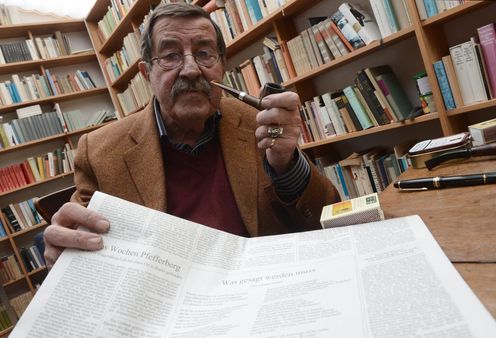
Günter Grass

The world of political poetry has suffered some significant losses in recent months. Václav Havel, a poet long before he was the last president of Czechoslovakia and the first president of the Czech Republic, died in late December 2011.

Although many of Havel’s poems were whimsical “concrete” poems, a good number were pointedly critical of Czechoslovakian society and politics of the time. These works, along with his other dissident activities, landed him in jail from 1979 until 1984.

February this year saw the death of the Polish poet and Nobel laureate, Wislawa Szymborska, whose poems chronicled Polish history from WWII, through Stalinism and beyond. “My poems are strictly not political. They are more about people and life,” Szymborska once remarked, “but, of course, life crosses politics.”

Feminists – and certain political regimes – have long believed that the personal can be very political indeed. It’s a message reiterated by Adrienne Rich, one of America’s most influential contemporary poets, whose poetry books have sold close to a million copies.

As a woman and a lesbian of Jewish descent, Rich was concerned with the politics of identity long before the idea became de rigueur. Poetry is a map, she declares in her poem, “Dreamwood”: not a revolution, “but a way of knowing / why it must come”. Rich’s death on 27 March dispatched a wave of mourning around the world.

The marriage between poetry and politics has a long history. Archilochus wrote some of the earliest political poetry, and Horace’s tribute to Augustus’s principate in the Roman Odes is among the greatest political poetry ever written.

While much of the earliest political poetry was written in tribute to leaders, much of contemporary political poetry is written in protest.

Robert Hass, American poet laureate (1995-97), elucidates the contemporary view: “I think the job of poetry, its political job, is to refresh the idea of justice, which is going dead in us all the time.”

Nevertheless, political poetry can be difficult for the critic to esteem. Harold Bloom held it to the highest measure in his attack on The Best American Poetry 1996 anthology, edited by Adrienne Rich, calling it “a stuffed owl of bad verse”. He was unable, he claimed, to find in it more than an authentic poem or two.

“It is of a badness not to be believed, because it follows the criteria now operative: what matters most are the race, gender, sexual orientation, ethnic origin, and political purpose of the would-be poet. Sincerity, as the divine Oscar Wilde assured us, is not nearly enough to generate a poem.”

Yet sincerity is precisely the stuff of which Günter Grass’ incendiary poem, “What Must Be Said”, is made. The poem’s argument is two-fold. First, Israel’s nuclear arsenal is a threat to the Iranian people and “endangers an already fragile world peace”;

Second it argues why for a long time he has felt unable to voice his fears owing to a greater fear of being punished for the sins of his German forefathers:
But why have I kept silent till now?

Because I thought my own origins,
tarnished by a stain that can never be removed,
meant I could not expect Israel, a land
to which I am, and always will be, attached,
to accept this open declaration of the truth.

Despite his declared attachment to Israel, Grass was right to worry. The poem caused a tremendous ruckus when it appeared on 4 April in several European newspapers.

It demonstrated decisively that poetry can “make things happen” after all, on 8 April Israel declared Grass a persona non grata and denied him future entry into the country.

Israeli Prime Minister Benjamin Netanyahu said the poem’s allegation that Israel poses a greater threat to world security than Iran – “a regime which denies the Holocaust and calls for Israel’s destruction” – is a “shameful moral equivalence”.

Grass was quick to apologise for the wording in his poem: instead of saying Israel, he should have said “the Netanyahu government”.

Despite the brouhaha the poem has incited, most critics agree it isn’t particularly good. Heather Horn, who translated it from German, chided its “needlessly Teutonic constructions” and “winding and parenthetical tone”.

Someone once said publishing a poem is like throwing a feather off a cliff and waiting for the thud. In Grass’ case the feather turned out to be an elephant and he was standing under it.

The absurdity of fuss generated by an average-at-best poem would be amusing, were it not for the toll it appears to have taken on Grass’s health.

On Monday this week – two weeks after the poem’s publication – Grass was admitted with suspected heart problems to a hospital in Hamburg. “There’s no danger to his life,” his doctor said in a written statement, assuring the world that the 84 year-old poet would return home by “the end of the week at the latest.”

In some societies – past and, sadly, some present – poets pay with their lives for the gall of social critique.

Putting politics aside, let’s hope Günter Grass’s price will not be so costly.

The Conversation

This article was originally published at The Conversation.
Read the original article.

The cambridge companion to creative writing: so much depends upon the line

Extract from chapter in Cambridge Companion to Creative Writing

“The line,” as James Logenbach contends, “is what distinguishes our experience of poetry as poetry”. Whenever we see, or more importantly hear, language arranged in lines we know we are entering the gallery of the poem. White space and silence frame the poem and alert us to its language. Consider the difference between William Carlos William’s “The Red Wheelbarrow” set as prose – “so much depends upon a red wheel barrow glazed with rain water beside the white chickens” – and the same words set in lines.

Cambridge_University_Press“The line,” as James Longenbach contends, “is what distinguishes our experience of poetry as poetry”. Whenever we see, or more importantly hear, language arranged in lines we know we are entering the gallery of the poem. White space and silence frame the poem and alert us to its language. Consider the difference between William Carlos William’s “The Red Wheelbarrow” set as prose – “so much depends upon a red wheel barrow glazed with rain water beside the white chickens” – and the same words set in lines:

so much depends
upon

a red wheel
barrow

 glazed with rain
water

beside the white
chickens.

As prose, the sentence moves swiftly so that its essential meaning can be easily grasped. But set in lines, language slows down: each word in the poem is clarified, intensified, and raised in stature. The words are experienced not only as signifiers but as objects in themselves. At a reduced pace meaning opens up and multiplies. The portmanteau “wheelbarrow”, for instance, is cleaved so that we are encouraged to contemplate the word “barrow”, which can refer to not only a cart but also, perhaps, to a burial mound. This is not to argue that “burial mound” is the preferred reading in this particular poem, but rather to show how a word, when isolated, can be unmoored from its strict context so that its alternative meanings might come into play.

In prose, a sentence has a single beginning and an end, but set in lines beginnings and endings are abundant. Each line in a poem refracts into additional beginnings and endings inside the sentence, which grants not only heightened significance through emphasis – the start and end of a line are always hotspots – but lines also offers a sense of equivalence in which words and phrases can be weighed, or balanced, against other words and phrases. Michael Dransfield’s “Pas de deaux for Lovers” offers an excellent example. The poem opens with a statement that “Morning ought not/to be complex” but the sun, the poet observes, has been “cast at dawn into the long/furrow of history”. The poet appears to be weighing this ideal of detachment against a dawning attachment to a lover:

To wake
and go
would be so simple.

Yet

how the
first light
makes gold her hair

We can imagine the poet looking down as he completes the image in the next stanza: “upon my arm.” The poem spins on the word “yet” which stands in isolation at the heart of the poem as a single-word line (and stanza). An otherwise small and almost insignificant word, “yet” is granted primacy of placement and as such it demands to be taken as central to the poem’s meaning. It punches above its weight and undoes both the argument and the poet, who is helpless against his growing emotion for his lover: “Day,” he concludes, “is so deep already with involvement.”

the end of the line

Determining where a line ends – or breaks – is the art of the poet. “There is at our disposal,” as Denise Levertov argues, “no tool of the poetic craft more important, none that yield more subtle and precise effects, than the line break if it is properly understood”. Essentially there are two types of line breaks: “end-stopped” in which the line ends with a clear and natural pause created by punctuation; and “enjambed” in which the phrase, clause, or sentence continues across a line-break to decrease the pause and speed up the rhythm and flow of the thought.

As we’ve seen, the interplay between the line and the sentence creates a dynamic unique to poetry. Sometimes, in the case of end-stopped lines, the line and the sentence correspond exactly, as in the opening lines of “Under One Small Star” by Wislawa Szymborska:

My apologies to chance for calling it necessity.
My apologies to necessity if I’m mistaken, after all.
Please, don’t be angry, happiness, that I take you as my due.
May my dead be patient with the way my memories fade.

The structure of the line is simple and clearly marked out for the ear by punctuation. The directness of the line accords a sense of formality to the poem that proceeds as a list of transgressions so human we would absolve the poet immediately, if we could. Szymborska achieves audible interest, however, in the middle of the poem and again at the end, as seen here, by extending the sentence beyond a single line:

Don’t bear me ill will, speech, that I borrow weighty words,
then labour heavily so that they may seem light.

Here, the end-stopped lines maintain balance and form, but the smaller pause of a comma contrasts with the longer pause (and breath) signalled by the full-stop to achieve a graceful fluency and increased flow.

But more commonly in contemporary poems – and as seen in the Williams and Dransfield poems above – a poet will aim for a more dramatic line-break by using enjambment. In Sharon Olds’s heavily enjambed poem, “I Go Back to May 1937”, the poet imagines her parents “standing at the formal gates of their colleges” in the late May sunlight:

I see my father strolling out
under the ochre sandstone arch, the
red tiles glinting like bent
plates of blood behind his head, I
see my mother with a few light books at her hip
standing at the pillar made of tiny bricks with the
wrought-iron gate still open behind her, its
sword-tips black in the May air …

Olds’s trademark narrative energy moves not just horizontally with the line but plunges down the page, her lines breaking on prepositions, articles, adjectives, and pronouns, forcing the reader to leap ahead, dizzily, for the noun or the verb. Sometimes the ride through an Olds poem is so violent it feels as if the poet has taken a pen in her fist and torn it down the page. Such heavily enjambed lines invigorate with their wilful incursion into the sentence, even if their liveliness comes at the cost of being harder for the ear to hear the structure.

Enjambment offers the additional quality of allowing the poet to spin meaning on its head. Working in a highly condensed form, poets often celebrate the possibility of generating multiple meanings from a single statement. In Robert Hass’s “Meditation at Lagunitas”, for example, the poet offers the idea that desire is full, amplified, but this meaning holds only for a moment before it is shattered in the next line:

Longing, we say, because desire is full
of endless distances.

When the syntax resolves we discover that we haven’t so much misread the first line but that the bittersweet enjambment has allowed two separate meanings to run concurrently.

the length of the line

Short lines, as seen in the Williams and Dransfield poems above, frequently can be found in contemporary free verse, where the poet determines line length based on a desire for equivalence, hesitation, emphasis, and other strategic effects. But sometimes a poet wants a more fulsome line: lines we can carry around in our bodies in the hope that we may summon them at a later date for the wisdom, consolation, wittiness, or joy they offer. Shakespeare’s “To be, or not to be: that is the question”, for instance; Emily Dickinson’s “Tell all the Truth but tell it slant – “; or Elizabeth Bishop’s “The art of losing isn’t hard to master”.

The success of these lines, and countless others, may have something to do with the way we think. In their article, “The Neural Lyre: Poetic Meter, the Brain, and Time”, Frederick Turner and Ernst Pöppel make a case for a remarkable congruency between poetry and the human nervous system. After examining a sample of metrical poetry from about eighty different cultures – from Africa to North and South America, Asia, and Oceania – they found a predominance of lines that take on average about three second to articulate. For Turner and Pöppel, this is no accident: a “the three-second period,” they argue, “roughly speaking, is the length of the human present moment”. In English a line of iambic pentameter corresponds most consistently – though not exclusively – with the three-second duration of our experience of the present moment. Which may account for tremendous popularity the ten-syllable line has had with poets through the ages.

Poets have used other parts of the body – the lungs in particular – to determine the length of their lines. Walt Whitman famously took his line to the end the human breath, which in turn inspired Allen Ginsberg to conduct his own experiments with the line as a unit of breath. Each line in “Howl”, for example, is designed be read in one breath:

I saw the best minds of my generation destroyed by madness, starving hysterical
naked,
dragging themselves through the negro streets at dawn looking for an angry fix …

Ginsberg’s line pulls the reader to its natural end. The lines are ecstatic to read, especially aloud, as the poet, like a puppeteer, pulls the strings on the reader’s body. Similarly, in his seminal essay, “Projective Verse”, Charles Olson formalised the idea of a “breath-line” – in so doing, he hoped to connect the poem again to the human body.

This extract is from a chapter, “Poetry and Poetics”, by Bronwyn Lea in Cambridge Companion to Creative Writing. Ed. David Morely and Philip Neilsen. Cambridge UP, 2012: 67-86.

Mateship with birds: you have to push in

Review of Mateship with Birds by Carrie Tiffany

Everyman’s Rules for Scientific Living was always going to be a tough book to follow. Carry Tiffany’s début novel, published by Picador in 2005, was shortlisted for various prizes, including the Miles Franklin Literary Award and the Orange Prize. It also won the Western Australian Premier’s Book Award in 2005 and the Dobbie Literary Award in 2007. Everyman’s Rules tells the story of a sewing instructor and a soil scientist who meet aboard the ‘Better Farming Train’ as it passes through the Victorian countryside, and who settle in the impoverished Mallee farmland. Similarly, Tiffany’s new novel, Mateship with Birds, opens in Cohuna, a small town in northern Victoria, in 1953. Harry is a middle-aged dairy farmer, divorced and looking for love.

066558-carrie-tiffanyEveryman’s Rules for Scientific Living was always going to be a tough book to follow. Carry Tiffany’s début novel, published by Picador in 2005, was shortlisted for various prizes, including the Miles Franklin Literary Award and the Orange Prize. It also won the Western Australian Premier’s Book Award in 2005 and the Dobbie Literary Award in 2007. Everyman’s Rules tells the story of a sewing instructor and a soil scientist who meet aboard the ‘Better Farming Train’ as it passes through the Victorian countryside, and who settle in the impoverished Mallee farmland.

Similarly, Tiffany’s new novel, Mateship with Birds, opens in Cohuna, a small town in northern Victoria, in 1953. Harry is a middle-aged dairy farmer, divorced and looking for love. He has his eye on Betty Reynolds, the unmarried mother of Michael and Little Hazel, who rents a small house next door. Betty is forty-five; for eight years Harry has watched her body age: ‘When she turns to speak to him he notices her softening jaw and her mouth – the lipstick on her front teeth.’ The air around them is thick with reticence. If there is sexual tension between them, it is buried deep. There doesn’t seem to be much need for talk, the narrator observes, but sometimes they talk about bunions.

Given its title – borrowed from A.H. Chisholm’s 1922 book of bird notes – a reader could be forgiven for thinking Tiffany’s novel is about ornithology. To a small degree it is. Harry observes a family of kookaburras that roost on his farm, and records his notes in poetry. Harry’s first poem, ‘Observations of a Kookaburra Family at Cohuna’, is written for Betty’s fourteen-year-old son, Michael. It begins:

The day starts in their throats.
Dad first, then Mum,
Tiny and Club-Toe.
The form of them in the red gum
by the dairy.
As regular as clockwork
they make their request for air.

Clichés aside (‘regular as clockwork’), at times the poems deliver a pleasing turn of phrase. Harry doesn’t pretend to be a poet, so there is not much use in applying a critical eye to his work. But given that his six poems span almost forty pages (approximately twenty per cent of the novel), Tiffany might have been wiser to submit Harry’s ramblings to a severe pruning. By any standard, the poems are too long, reliant on generalities, and painfully repetitive. How many times, for instance, can a reader encounter the likes of this without being tempted to skip ahead: ‘They come at dusk, / one by one. / Mum, Dad, / Club-Toe / and Bub.’

But poetry is not all that Harry is inspired to write. One day, after a morning spent artificially inseminating heifers, Harry stumbles upon Havelock Ellis’s Studies in the Psychology of Sex, which – along with the courtship rituals of spiders – presents a series of case studies detailing the sexual histories of ordinary men and women.

In the evenings, armed with a cup of Milo, a sharpened pencil, and several sheets of Basildon Bond, Harry sits down to write his own intimate disclosures. He begins with his earliest memories of sexual arousal at age four or five, moves through various teen gratifications, and concludes with the pleasures and problems of his former conjugal bed. Harry addresses his letters to Michael in an effort to save the boy from the sexual ignorance Harry himself had experienced.

But Harry is not content to restrict his tutelage to theory. In one of the most bizarre scenes in the novel – and it must be said, there are many – Harry takes Michael behind the dairy to where the phalaris grass has gone to seed. Michael looks on as Harry clips the seed heads and prunes the clump. Harry clears his throat:

Strong and wiry, Michael, the female pubic bush. Coarse. Nothing like the soft hair of the head. I’ve always thought of it more as fur than hair. Similar colouring can be expected. Dark hair, dark bush; mousy hair, mousy bush and so on, and it’ll all go to grey in the end with senile decay. Not that you have to worry about that for a while, eh?

Harry takes Michael’s hand and places it on top of the phalaris. ‘Don’t be tempted to stay on the surface,’ he instructs, ‘you have to push in.’ Still holding Michael’s hand, Harry concludes: ‘The pubic bush. A bloody miracle. And it has no sense of gravity. Despite being stuck halfway up in the air most of the time, from what I can see it doesn’t droop.’

It is not clear what Michael – or the reader for that matter – is to make of these ‘lessons’, but needless to say when Betty learns of the sexual tutelage Harry has given her son, she is not happy. Worryingly, the novel’s easy resolution invites the reader to disregard Harry’s actions rather than see them as, at minimum, outrageously misguided and – it must be said – a little icky.

Conceivably an exploration of 1950s sexuality might have made a fascinating study, but ultimately Tiffany’s new novel offers little insight into the most fundamental of human desires. Her characters, uniformly doleful, remain opaque throughout, and the narrative fails to achieve lift off. Perhaps Tiffany would have done better to cast her material as a short story and save her second novel for one more fitting of the talent promised by her impressive first.

This article was originally published under the title ‘Dubious Lessons’ in Australian Book Review 338 (Feb 2012): 27.

Foreword: australian poetry journal 1.1 #beginnings

‘Beginning is not only a kind of action’, Edward Said remarks in his celebrated book on the subject, ‘it is also a frame of mind, a kind of work, an attitude, a consciousness’. To be alert to a beginning is to be aware of departures and entrances: to be filled with the promise of what is to come. But to ask where a poem begins is to encounter a series of questions. Does a poem begin, thinking concretely, with its first line? Does its beginning proliferate with its peritexts: title, epigraph, dedication, subtitle? Does a poem begin the moment a body sits down to write it, or is there some other secret point at which the thought that impels the poem first came into being?

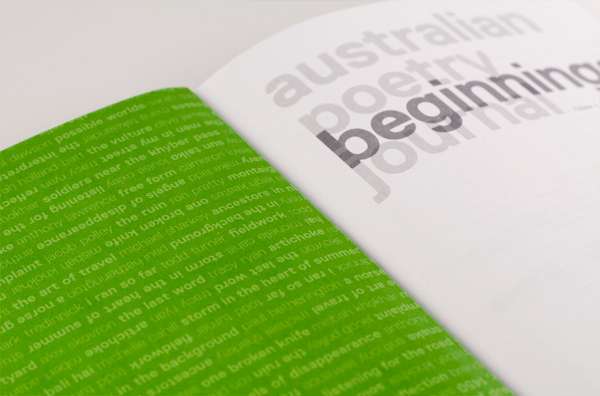
issue 1 volume 1 2011

‘Beginning is not only a kind of action’, Edward Said remarks in his celebrated book on the subject, ‘it is also a frame of mind, a kind of work, an attitude, a consciousness’. To be alert to a beginning is to be aware of departures and entrances: to be filled with the promise of what is to come. But to ask where a poem begins is to encounter a series of questions. Does a poem begin, thinking concretely, with its first line? Does its beginning proliferate with its peritexts: title, epigraph, dedication, subtitle? Does a poem begin the moment a body sits down to write it, or is there some other secret point at which the thought that impels the poem first came into being? Did Paul Hetherington’s poem, ‘A Norse Greenlander, 1450’, for instance, begin as he sat (I’m guessing) at his desk in Canberra, or did its authentic beginning manifest in the arctic circle some 500 years ago when a cold-weary woman sharpened her scythe and contemplated another frozen harvest.

Perhaps, to take an airier view, a poem does not truly begin until a human mind hits upon it and permits language to animate its neurons. The poem as a cognitive act depends on a host to arouse it from the dormancy it slips into between readings. But what then do the anarchic practices of reading – rarely do we read books and authors in chronological order – do to a poem’s antecedent beginnings? Some readers will, for example, encounter Pauline Reeve’s ‘After Akhmatova’ before reading the Russian poet who inspired it. Alex Skovron’s ‘The Attic’ enters truly uncanny territory with his idea of a translation predating the original: the unacknowledged translator in Skovron’s poem stores manuscripts in the dusty corridors of his attic, never to consult them until ‘the original, in its first language, appears / in some quarter of the city’.

Stranger still, it’s conceivable – to consider Christian Bök’s Xenotext experiment – that a poem will enact an alternate beginning beyond the human field. Using a ‘chemical alphabet’ Bök’s project is to translate his poetry into sequences of DNA he will implant into the genome of Deinococcus radiodurans, an extremophile bacterium so resilient it can live on the surface of the moon. The protein the cell produces in response will form a second comprehensible poem. This marriage of language and microbiology is not without precedent: in 2003 scientists inserted a DNA translation of ‘It’s a Small World’ into D radiodurans to demonstrate that the bacterium could be used to store information in the event of a nuclear catastrophe.

No poem, however much it might deviate or even mutate, can stand completely outside a tradition. Yet not all antecedents to a poem, it must be said, are necessarily born of literature: Brenda Saunder’s ekphrastic ‘Art of Travel’ begins inside the paintings of Manet and de Hooch; Margaret Bradstock’s ‘Bali Hai’ pays tribute to the late Margaret Olley; and Michael Sharkey grounds his ‘Ancestors’ poem in the staged grammar of nineteenth-century photographs.

The proposition that a poem’s meaning is to be found in its antecedents has long been a topic for debate in literary criticism. In ‘Questions to Answers’, Bonny Cassidy considers news books by Elizabeth Campbell, Ali Alizadeh, and Libby Hart in context of their earlier works. David McCooey, in ‘You Can’t Be Serious’, traces Ken Bolton and joanne burns’s present-day poetics to a beginning in the fight and footle of 1968. And in ‘Re-entering Bloomland’, Martin Duwell assesses Harold Bloom’s reassessment of his theory of influence in which so-called ‘strong poets’ attempt to make space for themselves by emulating and corrupting their poetic parentage.

But this is not to suppose we can do without the concept of a beginning. Moments of becoming, as moments of departure, are crucial to the construction of meaning in our lives – though at times the two might appear difficult to differentiate. As TS Eliot says in ‘Four Quartets’: ‘What we call the beginning is often the end / And to make an end is to make a beginning. / The end is where we start from’. ‘Beginnings’ seemed a natural topic for the inaugural issue of the Australian Poetry Journal. It enters a pre-existing world, but there is no question that it has arrived.

Michael ondaatje: a lion at the cat’s table

Review of The Cat’s Table by Michael Ondaatje

In English all the cool loanwords are German. The catalogue of human emotions would be incomplete without the world-weary melancholy carried by weltschmerz or the self-destructive yearning of sehnsucht. Schadenfreude – to take pleasure in another’s suffering – has proven indispensable, and zugzvang, a beautiful concept derived from chess in which a person is forced to be the author of his or her own destruction, appears everywhere once you’ve learned it. But Katzentisch comes to English only in translation. Literally “the cat’s table,” it refers to a low table at which the well-heeled feed their pets. Metaphorically it’s the kiddies table, or for big humans it’s the badly lit table in the restaurant corner.

ondaatjeIn English all the cool loanwords are German. The catalogue of human emotions would be incomplete without the world-weary melancholy carried by weltschmerz or the self-destructive yearning of sehnsucht. Schadenfreude – to take pleasure in another’s suffering – has proven indispensable, and zugzvang, a beautiful concept derived from chess in which a person is forced to be the author of his or her own destruction, appears everywhere once you’ve learned it.

But Katzentisch comes to English only in translation. Literally “the cat’s table,” it refers to a low table at which the well-heeled feed their pets. Metaphorically it’s the kiddies table, or for big humans it’s the badly lit table in the restaurant corner. In politics and business, the cat’s table is reserved for the office that exists but has lost the authority to act. It is also the title of Michael Ondaatje’s latest novel.

The Cat’s Table opens in Ceylon (as Sri Lanka was formerly known) in the early 1950s with an eleven-year-old boy boarding the Oronsay, a liner bound for England. At mealtimes he sits at Table 76 – “the least privileged place” in the dining hall – with two other boys, Cassius and Ramadhin, and an eccentric array of adults: among them a frequently tanked pianist who teaches the boys dirty lyrics; a botanist who tends an Ayurvedic garden in the ship’s hold; and a quirky spinster who consumes crime novels and houses pigeons in her jacket.

While the doyens of the Captain’s table “constantly toast one another’s significance,” the boy learns that all that is interesting happens mostly in secret, in places where there is no power. “It would always be strangers,” the adult narrator reflects, “at the various Cat’s Tables of my life, who would alter me.”

Seemingly The Cat’s Table courts a biographical reading: both the author and the narrator are named Michael, both were born in Colombo in 1943, both emigrate from Ceylon to England in 1954, both relocate to Canada as young men, and both become feted writers. In his “Author’s Note”, however, Ondaatje insists his “imagined rendering” is fiction, not memoir. It is an unnecessary disclosure: anyone familiar with Ondaatje’s oeuvre will know his project has long been to dissolve the boundaries of fact and fiction. But given the felonious events that transpire on board the Oronsay – sorcery, larceny, murder and more – perhaps a distinction was thought legally prudent.

Whether the author and the narrator share an antipathy toward authority or not, Ondaatje has been dining at the Captain’s table since his second novel, The English Patient, won the Booker Prize in 1992. Or more precisely, given the cinematic prejudices of our age, Ondaatje was ushered into literary “significance” four years later when Anthony Minghella’s film adaptation by the same name won nine Oscars, two Golden Globes and six BAFTAs.

The skyrocketing effect Minghella’s English Patient had on Ondaatje’s career cannot be overstated. The film became compulsory viewing for the fashion set, stimulating the book’s sales in excess of two million copies worldwide. Both the book and the film, Ondaatje muses in a 1997 interview, acquired “a slightly sacred fog” in the public imagination.

Not surprisingly The English Patient also became a target for satire. Shortly after the film’s release a popular Seinfeld episode pilloried its worthiness, deeming people who didn’t like the movie – as Elaine didn’t – “flinty hearted” and “untrustworthy.” For her aesthetic insurrection Elaine is punished with a trip to Tunisia (the filming location of The English Patient) where she must live in a cave in order to save her job. Similarly in Chuck Palahniuk’s new novel, Damned (2011), hell is a place where The English Patient plays on eternal loop.

But before afflictions of fame, Ondaatje enjoyed the relative obscurity afforded a poet. Beginning with The Dainty Monsters in 1967, Ondaatje has published a total of eleven books of poetry, earning him the steady admiration of critics and a select but ardent trove of readers. In 1991 The Cinnamon Peeler: Selected Poems assembled twenty-five years of Ondaatje’s greatest lyric poems in a tour de force: the title poem – “The Cinnamon Peeler” – which would surely stand among the best erotic love poems in English, as well as the much anthologized “To a Sad Daughter”, “White Dwarfs”, “Last Ink” and the extraordinary elegies for his mother and father, “Light” and “Letters & Other Worlds”, to name a small handful.

Ondaatje’s poetry – like his novels – often intersects with history. His second book, an imagistic suite of poems entitled The Man with Seven Toes, was inspired by Sidney Nolan’s Mrs Fraser series of paintings (1947-57) and Colin MacInnes’s brief account of Eliza Fraser’s fascinating but tragic life: shipwrecked off the Queensland coast in 1836, she was captured by aborigines and rescued by David Bracewell, a convict whom she betrays upon arriving in civilization. (Fraser is also the subject of Patrick White’s 1976 novel, A Fringe of Leaves.)

But Ondaatje’s career wasn’t underway until his second book, The Collected Works of Billy the Kid (1970) – a grab bag of poems, prose, photographs and fictional news stories about sociopathic William “the Kid” Bonney and his gang of killers – fell into the wrong hands.

“The ex-Prime Minister [of Canada] John Diefenbaker was essentially out of a job, but he was a very cantankerous, wonderful old demagogue,” Ondaatje recalls in a 1997 interview. “He read the book, and he just hated it. So he called all the cameras in for a news conference, and he said, ‘This is disgusting!’ There was a picture of me on the front page of the newspaper.

“Only about eight people had bought the book, so it was quite sweet in some way for him to read it,” Ondaatje laughs. “I wasn’t so upset by him disliking the book, but it put me into a tailspin about being semi-known. Even on a small scale, it was difficult not to be self-conscious about being a writer.”

Ondaatje’s early style is challenging but the effects are stunning. Ever evading a master narrative, he tells stories through pieces of song, faded photographs, snatches of conversation. The pieces don’t always meet at the edges, sometimes they overlap, and it’s left to the reader to make the meaning and provide the glue. Ondaatje’s writing never seems to move in straight lines. As Pico Iyer says, “It circles and slants and echoes and returns.”

In 1970 Ondaatje published a monograph on fellow Canadian writer, Leonard Cohen. The two writers share more than an emotional climate – a moody often erotic reverence for violence and beauty – they feed from the same lexicon of wounds, scars, madness, dreams, broken glass, bones, chaos, and kindnesses. Ondaatje offers a description of Cohen’s künstlerroman, The Favorite Game, that could easily serve as an artistic statement for his own practice:

“It has the effectiveness of a long prose poem,” he writes, “with each scene emerging as a potent and enigmatic sketch, rather than a full blown detailed narrative. As in a poem, the silences and spaces, what is left unsaid, are essential to the mood of the book.”

Ondaatje’s novels would, in time, surpass his mentor’s in ambition, sophistication and reach. Alongside The Man with Seven Toes and Billy the Kid, his poetic novel-of-sorts, Coming Through Slaughter – a jazzy, syncopated riff on the short, mad life of legendary cornet player Buddy Bolden – all stand as amphibious texts bridging Ondaatje’s poetry and prose.

In 1982 Ondaatje’s masterwork in prose appeared in the form of a memoir, Running in the Family, which chronicles his return to Sri Lanka to grapple with the lives of his parents: his father, Mervyn Ondaatje, was a tea and rubber-plantation superintendent afflicted with alcoholism; and his mother, Doris Gratiaen, a part-time radical dancer inspired by Isadora Duncan. Both were prominent inhabitants of what once comprised Ceylon’s flamboyant if frivolous colonial society. Ondaatje writes:

I must confess that the book is not a history but a portrait or ‘gesture’. In Sri Lanka a well-told lie is worth a thousand facts.

Despite his earlier prose works, Ondaatje calls In the Skin of the Lion (1987) his “first novel”. It is also one of his best. Set in Toronto in the 1920s and 30s it imagines the lives of the Macedonian immigrant community who built the city’s bridges and waterworks. Ondaatje’s attentiveness to beauty, despair, and lives lost to official history builds a searing narrative even as its language and circular structures pull its telling towards poetry.

Increasingly since The English Patient, Ondaatje’s novels have become less experimental, the shifts in perspective less dramatic, the language more denotative. Anil’s Ghost (2000) follows the life of Anil Tissera, a native Sri Lankan and forensic anthropologist, working as a Human Rights investigator during Sri Lanka’s civil war. Divisadero (2007) divides its attention between a family in 1970s California and an author in pre-World War I southern France. Both novels are skillfully drawn but neither quite manage the magic of his earlier works.

And so it is with his sixth novel, The Cat’s Table. Ondaatje’s preoccupations and signatory motifs are present in abundance: dogs, thieves, acrobats, tapestries, wounds, dreams, jazz, and poetry. And his eye for the cinematic moment still pulls off a splendid stillness. Each morning of the 21-day passage, the boys wake at dawn to spy on an Australian roller skater who races the perimeter of the deck and showers fully clothed: “When she left we followed her footprints”, the narrator confesses, “which were already evaporating in the new sunlight as we approached them”.

A study of one’s childhood is not uncommon in late-career writers. Perhaps having lost much of his childhood to the desperate antics of his parents, Ondaatje is compelled to return to the puzzle of his early years. If Tolstoy, Conrad and Coetzee had not pre-empted him, he says, he would have called his novel Youth.

Yet in stripping back the sophistication of his narrator’s voice to accommodate a child’s perspective, Ondaatje has deprived The Cat’s Table of the force of language that largely carried his earlier works. And in attempting a more straightforward telling, he has exposed his inherent weaknesses with narrative. One wishes he’d held his nerve and stuck to his earlier rhythms that, while difficult, were dazzling.

Ondaatje admits he doesn’t remember the day in 1954 that he arrived as an unaccompanied minor in the port of London. In his novel, he imagines Michael is met by his mother but he’s not sure he will recognize her face. He is wearing his first pair of long trousers, socks, and a thin cotton shirt. “You must be cold, Michael,” his mother says, pulling him to her. He can see part of the world to the side of her, the figures rushing past barely aware of him in his mother’s arms, the borrowed suitcase with all he owned beside him.

A reluctant guest or not, Ondaatje has earned his place at the Captain’s table – if not for this novel alone, but for what came before it, and for what we hope might follow.

Originally published under the title ‘The Cat’s Table’. Rev. The Cat’s Table by Michael Ondaatje. Australian Literary Review (October 2011): 23.